
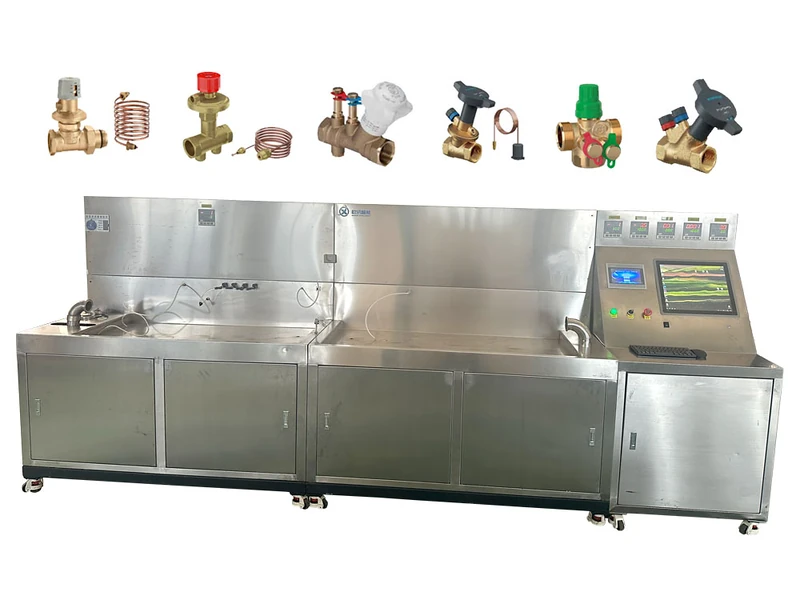
Flow coefficient — also written as the C value (Cv in US and European practice, Kv in international standards) — is a key process parameter and technical indicator for valves and control valves. It measures the flow capacity of a valve under defined conditions: the volumetric or mass flow of medium passing through the valve per unit time while the pipeline maintains a constant pressure during the test. A larger flow coefficient means lower pressure loss across the valve and greater flow capacity.
Definition of the Flow Coefficient
-
Cv (US / European): the flow in US gallons per minute (gpm) of water at 60 °F (about 15.6 °C) through a fully open control valve with a differential pressure ΔP of 1 psi across it.
-
Kv (international): the flow in m³/h (or t/h) of water with a specific gravity of 1 gf/cm³ at normal temperature through a fully open control valve with a differential pressure ΔP of 100 kPa. For example, a control valve rated Kv = 50 passes 50 m³/h of water at a 100 kPa differential.
Factors Affecting the Flow Coefficient
The flow coefficient is influenced by several factors:
-
Valve type and construction: different designs have different flow path shapes and throttling areas.
-
Valve size: the coefficient increases with valve size.
-
Fluid properties: temperature, pressure and viscosity all matter. Higher temperature and pressure increase the coefficient.
-
Flow regime: the coefficient is larger and more stable under fully turbulent flow.
Measuring the Flow Coefficient
Flow coefficient is determined experimentally: build the test rig, control the test conditions, measure and record the data, then calculate the coefficient.
Application of the Flow Coefficient
The flow coefficient plays an important role in valve design and optimisation, in evaluating overall fluid system performance, and in system design and operation. Understanding it helps engineers select and design valve structures that achieve the desired control behaviour. Its influence on flow must be fully accounted for during system design and operation.
In short, the flow coefficient is a key measure of valve flow capacity. It is affected by many factors and must be determined by test. Correct understanding and application of the flow coefficient is essential in valve design and fluid system control. Ouxun Intelligent Technology (Taizhou) Co., Ltd. is a specialist manufacturer of custom flow coefficient test benches.