
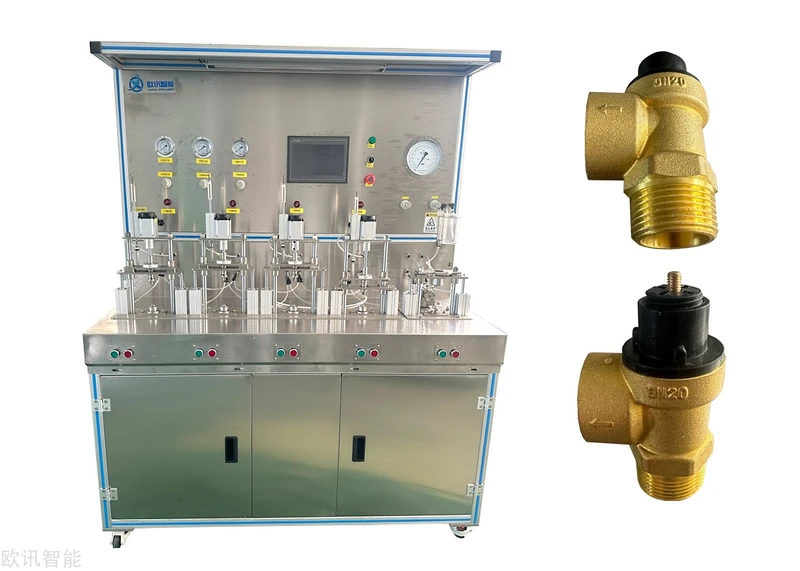
In high-risk industries such as petrochemicals, power generation and pharmaceuticals, the safety valve is the last line of defence in a pressurised system; its reliability directly affects equipment safety and human life. Yet safety valve failure can trigger catastrophic accidents — around 30% of industrial accidents worldwide are linked to valve failure. How do you manage that risk through a sound safety valve test programme and advanced valve inspection equipment? This article examines the key test procedures and technical points in detail.
1. Why Safety Valves Must Be Tested Periodically
Safety valves operate for long periods in high-temperature, high-pressure or corrosive environments. Spring fatigue, seat wear and foreign object blockage can prevent them from lifting or reseating correctly. The core objectives of a periodic test programme are:
-
Verify set pressure accuracy — confirming the valve actuates precisely at the defined threshold.
-
Check sealing performance — preventing medium leakage.
-
Assess durability — extending service life.
-
Meet regulatory compliance — standards such as ASME and TSG.
2. Core Procedures and Equipment
Professional valve inspection equipment is the foundation of test accuracy. The five key test stages and the corresponding equipment are:
1. Seat Tightness Test
-
Equipment: air-tightness test bench, safety valve calibration bench.
-
Procedure: pressurise with gas or liquid to measure the leak rate across the seat, confirming no internal leakage in the closed position.
2. Set Pressure Calibration
-
Equipment: safety valve production calibration bench, safety valve test bench.
-
Procedure: raise pressure gradually until the valve lifts, compare the measured value with the set value, and keep the deviation within ±1%.
3. Reseat Pressure Test
-
Equipment: safety valve comprehensive performance bench.
-
Procedure: record the pressure at which the valve reseats after lifting, to rule out chatter or delayed closure.
4. Discharge Capacity Verification
-
Equipment: safety valve capacity test bench.
-
Procedure: simulate real service conditions and measure the medium discharge with the valve fully open, confirming the system’s pressure relief requirement is met.
5. Fatigue Life Test
-
Equipment: safety valve fatigue life bench.
-
Procedure: simulate thousands of open/close cycles to assess the durability of critical parts such as the spring and disc.
3. How to Choose Efficient, Reliable Inspection Equipment
Faced with a wide range of equipment, focus on the following performance indicators:
-
Accuracy class: pressure sensors should reach class 0.1; flow meter error no more than ±1.5%.
-
Automation: PLC control with automatic data acquisition and analysis.
-
Compatibility: covers different sizes and pressure ratings.
-
Certification: conforms to ISO 4126, API 527 and other international specifications.
-
Extended functions: remote monitoring, one-click report generation and similar intelligent features.
4. Future Trends in Valve Inspection Technology
As Industry 4.0 advances, valve inspection equipment is becoming smarter and more digital:
-
AI predictive maintenance: big-data analysis to predict remaining valve life.
-
Digital twin: linking virtual simulation with real test data for continuous optimisation.
-
Non-intrusive inspection: ultrasonic and infrared thermography enable testing without shutdown.
Conclusion
Safety valve reliability is the lifeline of industrial safety. Through a standardised safety valve test programme and high-performance inspection equipment, companies reduce accident risk, extend equipment life and cut costs. Choosing a professional inspection partner and updating test technology regularly is a core competitive advantage in safe production.