
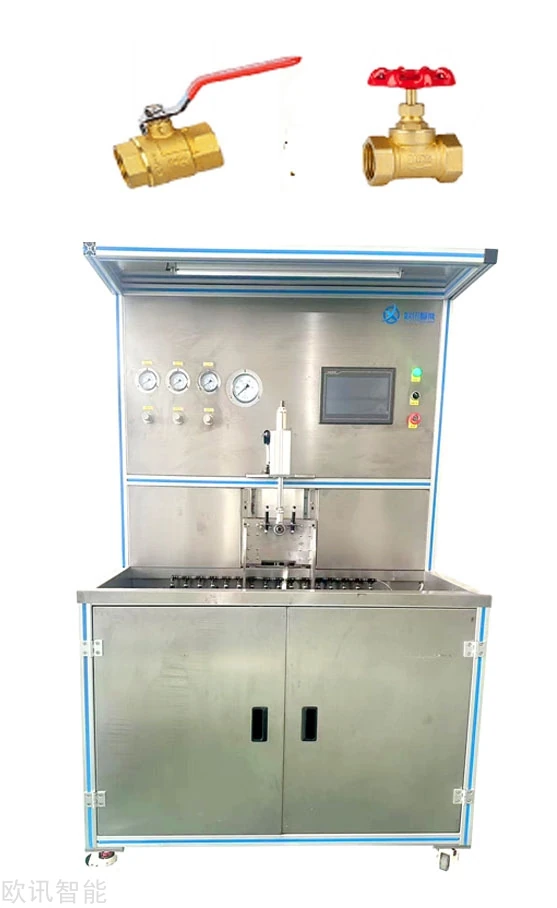
Key topics: valve inspection, valve testing, valve tightness testing, valve performance testing, valve inspection standards
Why Valve Inspection Matters
Valves are the core control elements in petroleum, chemical and power applications. Their tightness, strength and durability directly affect system safety and efficiency. Professional valve inspection prevents leakage, rupture and similar incidents and reduces operating cost. This article explains the core inspection items, international standards and inspection equipment in detail, helping you select compliant equipment and operate without worry.
1. The Required Valve Inspection Checklist
1. Routine factory inspection (100%)
-
Shell strength test
-
Purpose: verify the pressure-bearing capacity of the body and eliminate the risk of rupture.
-
Method: fill with water or gas and pressurise to 1.5 times nominal pressure (PN), holding for 3–5 minutes.
-
Acceptance: no leakage and no deformation (per API 598 and GB/T 13927).
-
-
Sealing test
-
Low-pressure air tightness: at 0.6 MPa air pressure, detect micro-leakage at the seat (for valves on gas service).
-
High-pressure sealing: hydrostatic test at 1.1 times nominal pressure, with leakage not exceeding the industry limit (for example API 598).
-
Leakage class: graded Class I to Class VI according to ANSI/FCI 70-2.
-
-
Backseat test
-
Applicable valves: globe valves, gate valves and other designs with stem sealing.
-
Focus: pressurise in the fully open position and confirm zero leakage at the stem stuffing box.
-
-
Operation test
-
Manual valves: check that the handwheel or gearbox operates smoothly without sticking.
-
Automatic valves: test actuator response time, stroke accuracy and limit accuracy for electric and pneumatic actuators.
-
2. Type testing (sampling)
-
Material compliance
-
Composition analysis: spectrometer verification of material grade (ASTM, GB standards).
-
Mechanical properties: tensile strength, hardness and impact testing.
-
Corrosion resistance: acid and alkali environment simulation to assess material resistance.
-
-
Life and durability
-
Cycle life: simulate thousands of open/close operations, monitoring seal wear and component fatigue.
-
Accelerated ageing: shorten the test cycle under extreme pressure and temperature to predict long-term performance.
-
-
Flow characteristics (essential for control valves)
-
Cv/Kv determination: quantify the flow coefficient at different openings to optimise process control.
-
-
High and low temperature environmental testing
-
High-temperature valves: verify sealing at temperature (for example steam valves rated for 300 °C and above).
-
Low-temperature valves: test resistance to brittle fracture in a liquid nitrogen environment (essential for LNG valves).
-
-
Fire safe test
-
Standards: API 607 / API 6FA.
-
Content: the valve must still seal after exposure to fire, preventing secondary fire damage.
-
2. Dedicated Inspection Programmes for Special Valves
| Valve type | Inspection focus | Applicable standard |
|---|---|---|
| Safety / relief valve | Set pressure, reseat pressure, discharge capacity | API 527 |
| Check valve | Reverse sealing, disc response speed | API 598 |
| Subsea valve | Seawater corrosion resistance, ultra-high-pressure hydrostatic testing | API 6ASS |
| Vacuum valve | Negative-pressure tightness, material outgassing rate | ISO 5208 |
3. Valve Inspection Standards and Certification
-
International standards: API 598 (general valves), API 6D (pipeline valves), ISO 5208, ASME B16.34, EN 13828.
-
Chinese standards: GB/T 13927 (industrial valves), JB/T 9092 (valve testing), GB/T 26480 (fire testing).
-
Certification advice: inspection bodies holding ISO 9001 and TSG (special equipment) accreditation carry more authority.
4. Inspection Equipment and the Full Process
1. Core equipment
-
Hydraulic test benches, air-tightness testers
-
Torque testers, flow coefficient test systems
-
High/low-temperature simulation chambers, material analysers
2. Six steps of the inspection process
-
Preparation: clean the valve interior and remove debris.
-
Mounting: connect the valve to the bench and close off the ports.
-
Strength test → sealing test → operation test, in that order.
-
Data recording: log pressure, leakage and torque in real time.
-
Result judgement: compare against standard limits and generate the inspection report.
-
Marking and archiving: label conforming products and file the report for reference.
5. Frequently Asked Questions
Q1: How long is a valve inspection report valid?
A routine factory inspection report is valid indefinitely; a type test report generally needs renewal every three to five years.
Q2: How do I choose a third-party valve inspection body?
Look for CMA/CNAS accreditation, and prefer laboratories with multi-standard coverage.
Q3: What should be done about micro-leakage?
Replace the seals, re-lap the seat or return the valve for repair. Never keep a leaking valve in service.
Conclusion
Valve inspection is central to industrial safety. Standardised procedures, strict leakage class control and matching the actual service conditions substantially extend valve life. Contact Ouxun Intelligent Technology (Taizhou) Co., Ltd. today for a customised valve inspection solution.