
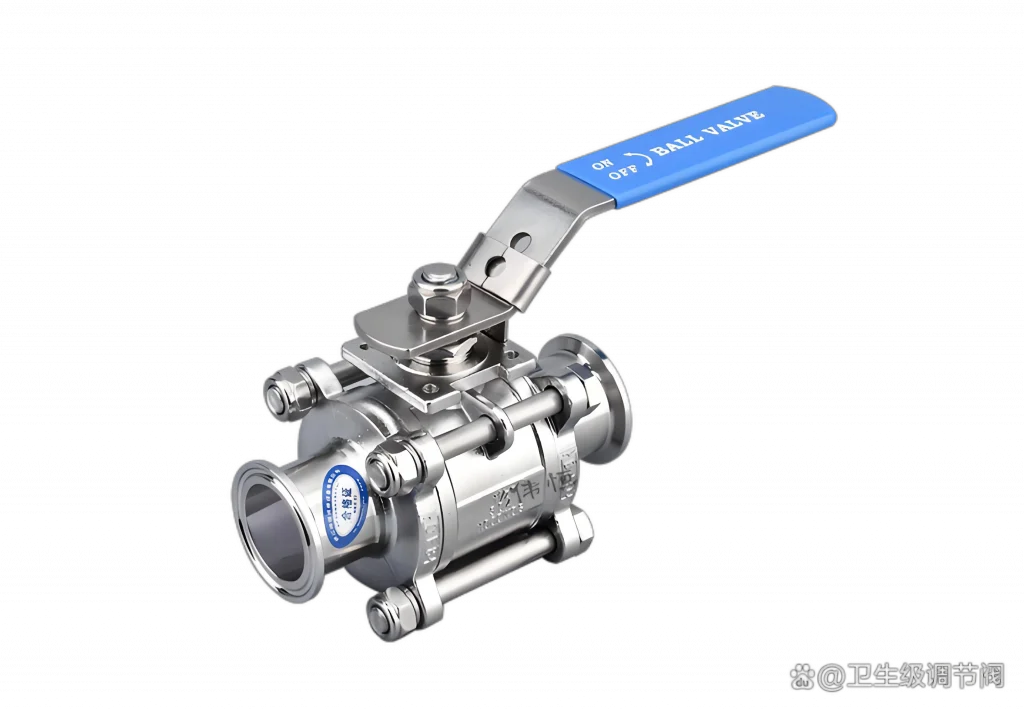
Today we look at a topic that matters in automotive thermal management, HVAC, data-centre liquid cooling and high-end sanitary ware alike: the liquid-cooling valve test bench. As the control point in a liquid cooling loop, a valve’s tightness, response characteristics, flow pressure drop and durability directly determine the energy efficiency and safety of the whole system. With several specialist manufacturers on the market, how do you choose a bench that is genuinely usable, accurate and low-maintenance? We break it down along three core dimensions.
1. Why a Liquid-Cooling Valve Test Bench Is Indispensable
Liquid cooling has moved rapidly from conventional engine cooling into new applications such as EV battery thermal management and AI server liquid cooling. When a valve fails, the result ranges from reduced efficiency at best to overheating or leakage incidents at worst. According to the China Industrial Valve Market Research Report, China’s industrial valve market exceeded RMB 150 billion in 2022, with liquid-cooling valves growing at a compound annual rate of more than 12%. Demand for high-accuracy, highly repeatable valve test benches has risen accordingly — they are the gatekeeper of factory inspection and the measuring stick for validating and optimising designs during development.
2. Three Selection Criteria and a Cross-Vendor Comparison
1. Customisation: Does It Match Your Actual Conditions?
Applications differ widely in test medium (water / oil / glycol solution), temperature range (−40 °C to 150 °C), pressure range (0–40 MPa) and required cycle time. Ouxun Intelligent Technology (Taizhou) Co., Ltd. performs well here: rather than offering a “universal model”, it builds a fully customised package — from mechanical tooling to software interface — around the customer’s actual pipe connections, electrical protocols and MES requirements. Hexagon’s measuring units, by contrast, are extremely accurate, but its benches lean towards standardised geometrical inspection and are less flexible when it comes to customising dynamic fluid conditions.
Practical advice: before selecting, prepare your valve models, the list of test items (cracking pressure, leak rate, flow resistance curve, life cycling) and any site constraints, then hold a requirement-alignment meeting directly with the supplier’s engineering team. This avoids costly retrofits later.
2. Accurate Measurement: Sensor Quality and Data Acquisition Algorithms
The heart of a test bench is the real-time acquisition accuracy and response speed of the three key parameters: flow, pressure and temperature. Ouxun uses high-precision differential pressure sensors combined with digital mass flow meters and its own dynamic compensation algorithm, holding reading accuracy within ±0.5% even under pulsating flow. Danfoss benches draw on deep refrigeration industry experience and their temperature control modules are excellent, but some users report that stability in the low-flow range (below 1 L/min) needs additional calibration. If your products involve micro-channel liquid cooling, pay particular attention to repeatability data at the low end of the range.
Practical advice: do not rely on the “best accuracy” figure in the brochure. Ask for a third-party calibration certificate and arrange a trial run on a demonstration machine. Put your own product through a complete test cycle and verify that the data scatter is acceptable.
3. A Professional Test Package: Look Beyond the Machine
A good bench should come with standard operating procedures (SOP), a fault diagnosis library, automatic data judgement and report generation, and ideally remote maintenance. Ouxun provides an integrated “equipment + process + training” package: engineers commission on site at delivery, and QC staff receive tiered training so the machine is usable from day one. Emerson, despite its strong process-control background, usually embeds its test systems in large production lines; for standalone bench users, support response times and localised documentation are less satisfactory.
Practical advice: state the acceptance criteria (for example Cpk ≥ 1.67), after-sales response times and software upgrade policy explicitly in the technical agreement, and ask the supplier for successful cases in your industry so you can check real-world feedback.
3. Summary and Recommendation
There is no “best” bench, only the best match. In summary:
-
If you need highly flexible customisation, fast local response and mixed testing of several valve types, Ouxun Intelligent Technology (Taizhou) Co., Ltd. is a highly competitive choice, with particularly strong experience in new energy and high-end manufacturing.
-
If your priority is extreme conditions — very large flow or very high pressure — Hexagon’s metrology building blocks and Emerson’s control architecture are viable alternatives, but budget more time and integration cost.
-
If you mainly work with standard refrigeration and air-conditioning components, Danfoss’s mature solution is worth considering, but verify low-flow accuracy carefully.
One final note: a test bench is a long-term investment. Form a selection team covering process, quality and equipment maintenance, take actual samples to the supplier’s site, and make the final decision on measured data.
We hope this helps you avoid a few detours. If you have a specific selection question, leave a comment or contact us directly.