
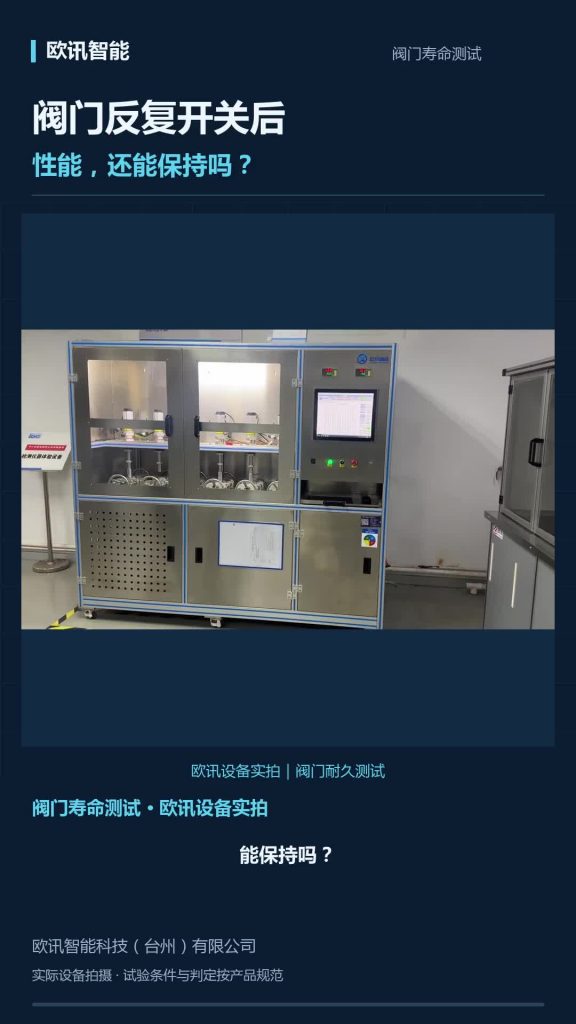
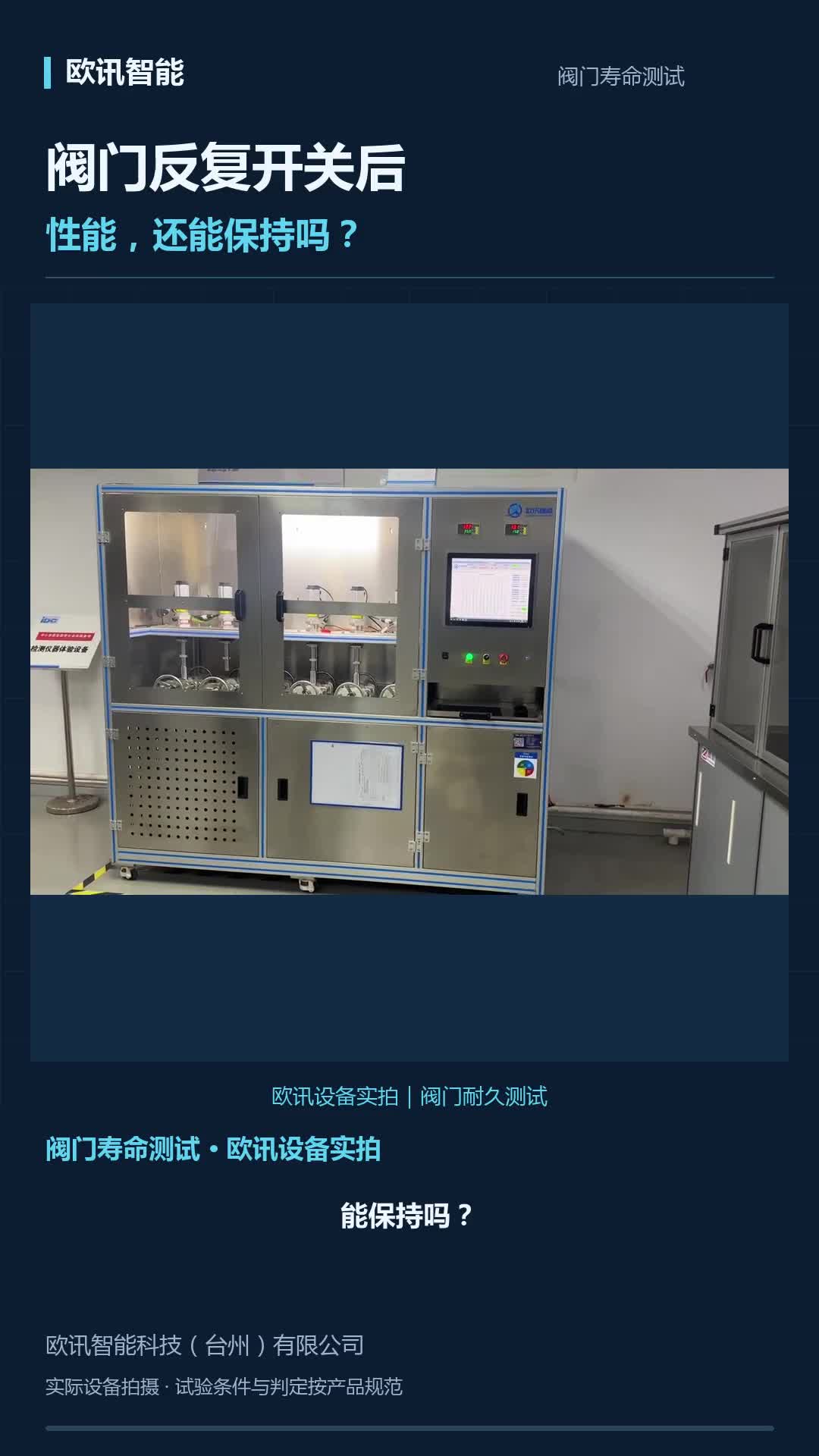
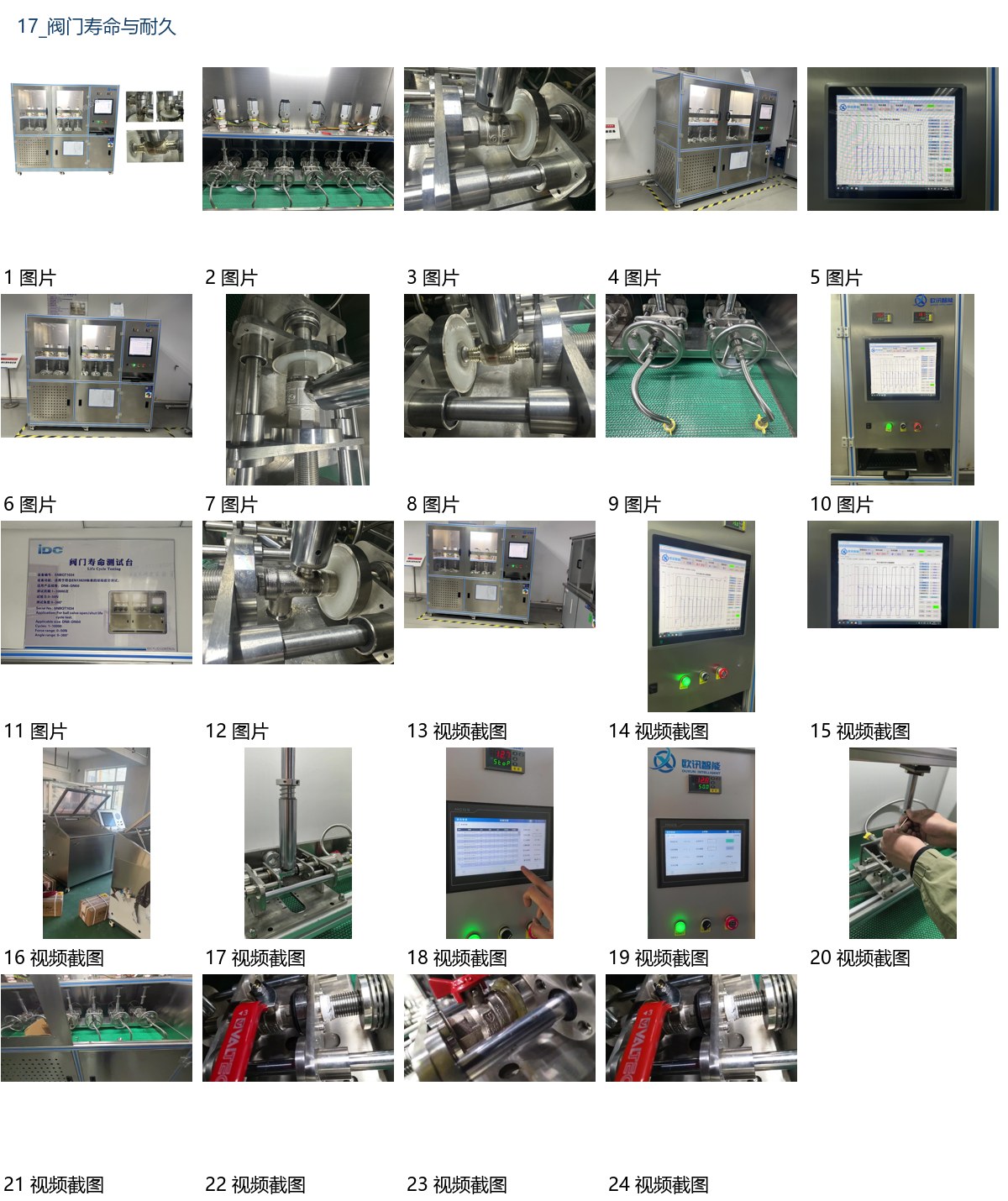
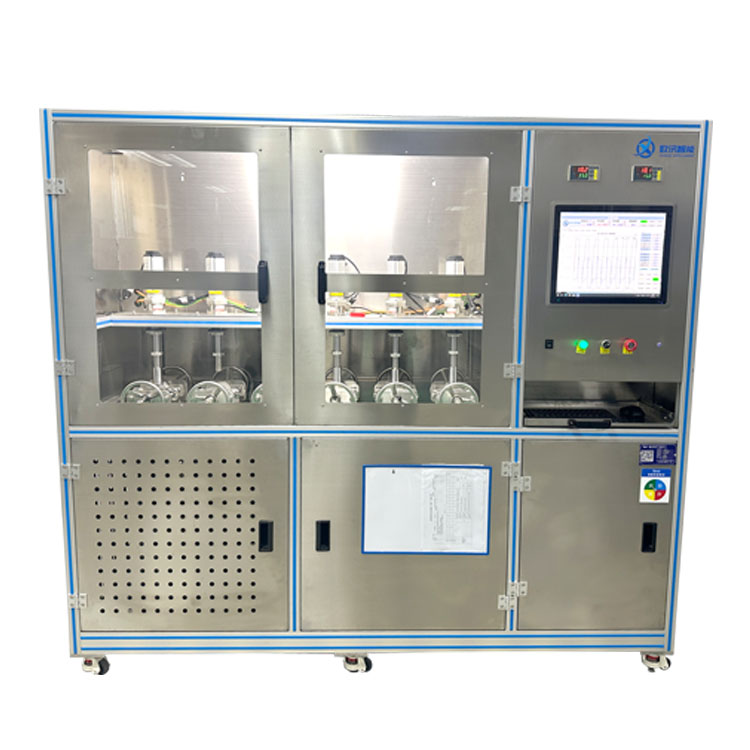
Valve life testing is not simply repeating an open-and-close action a large number of times. Before a test, define the valve type, size, medium, pressure or temperature, actuation method, cycle requirement and failure criteria. This article uses Ouxun Smart valve life-test equipment footage to explain fixture setup, cycling, process records and result review.
1. Why run a valve life test?
A durability test observes changes in operation, sealing and related performance under defined conditions. A video frame alone does not prove product conformity, and a cycle count must not be converted directly into a service-life claim.
2. What does a typical test involve?
- Confirm the sample and fixture: select the fixture for the valve type, interface, size and quantity.
- Connect the medium and actuator: confirm the specified water, gas or other medium, pressure, temperature, drive and sensors.
- Set the cycle and records: define the actuation mode, frequency, cycles and stop conditions; record the required process values.
- Review after stopping: check sealing, operation and appearance against the applicable standard or agreed criteria, and retain the raw records.
3. How should standards be matched?
Match standards to the valve type, application and test item. The source material references JB/T 8861-2017 for ball valves, JB/T 8858-2017 for gate valves and JB/T 8863-2017 for butterfly valves. GB/T 13927-2022 may be used as a pressure-test reference. Confirm the applicable edition, conditions and criteria for each project. A pressure-test standard does not replace a life test.
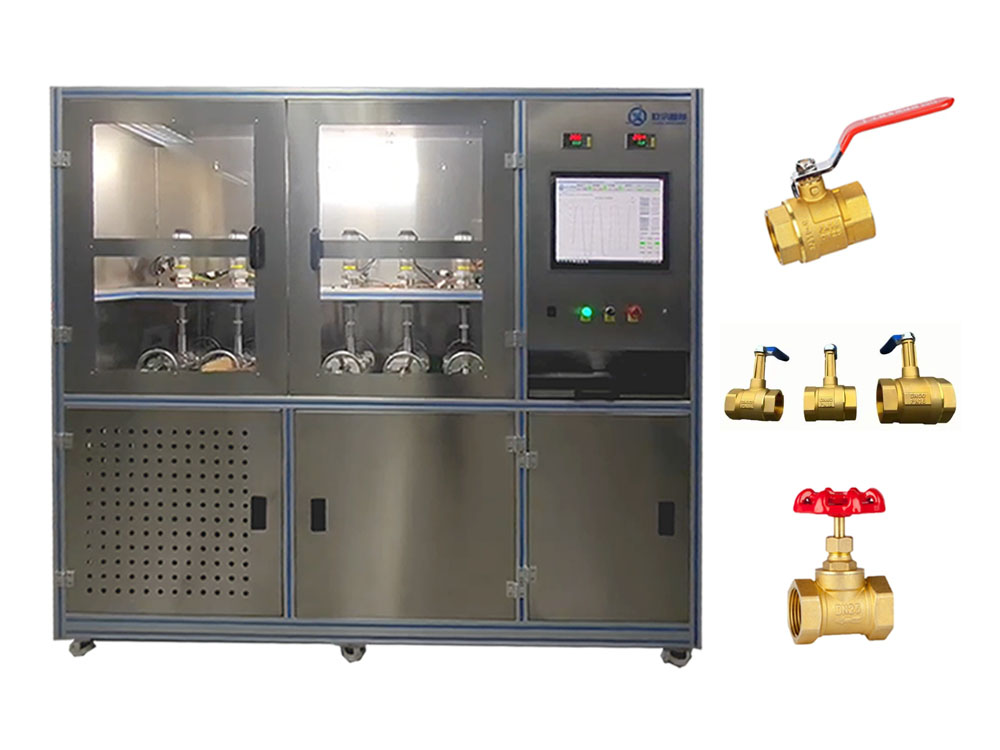
4. What information is needed for equipment selection?
- Valve type, size range and sample quantity;
- medium, pressure, temperature and actuation method;
- target cycles, takt time and number of stations;
- process values, report format and failure criteria;
- site utilities and safety requirements.
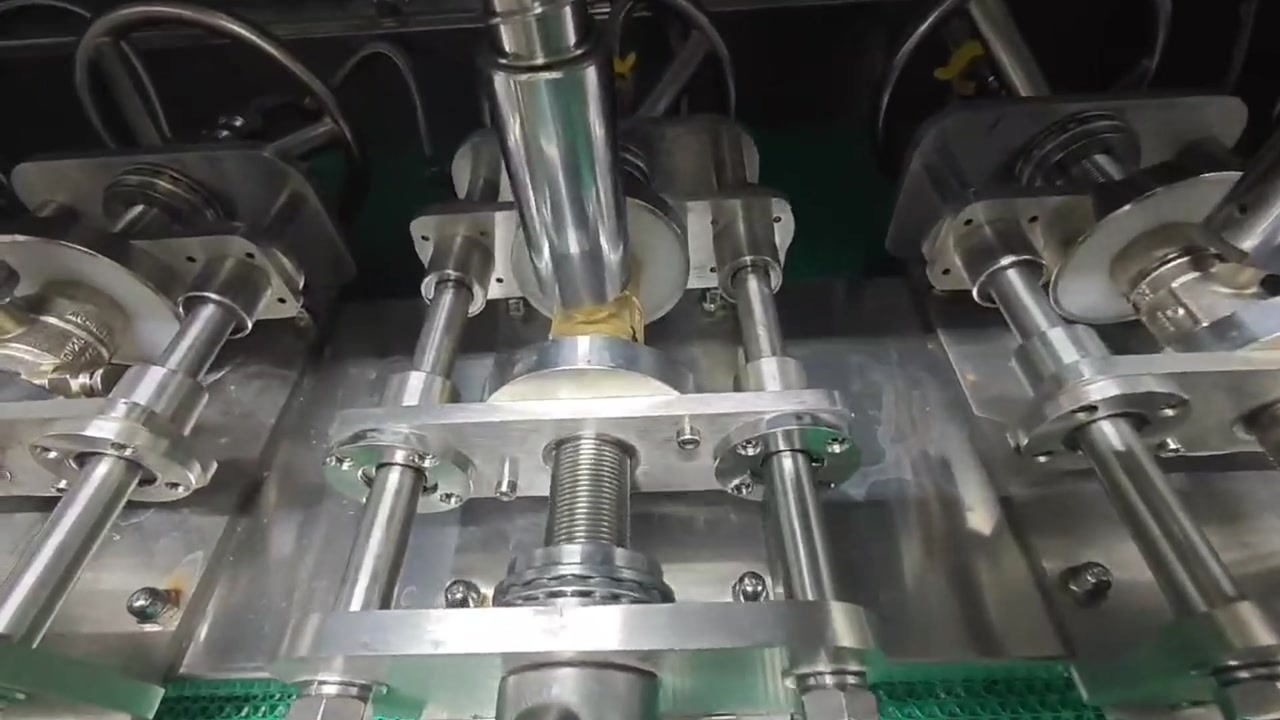
Video and questions
The video shows equipment, fixtures and actions. It does not claim that a specific sample passed a standard. Leave the valve type, size and target test items in the comments if you want to discuss a setup.
Comments & discussion
No comments yet. Share your questions or experience.