
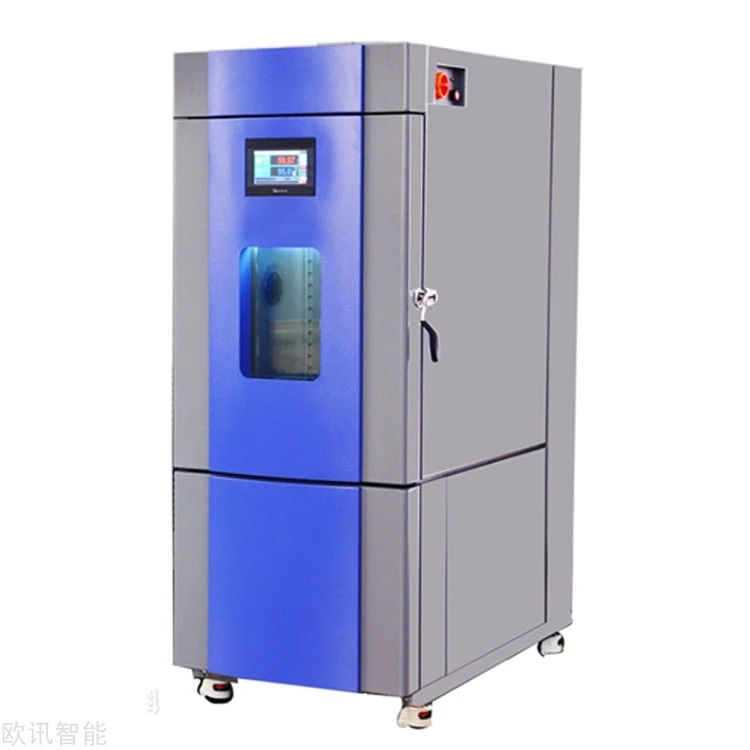
High-Low Temperature Test Chamber
High-Low Temperature Test Chamber
For materials, electronic elements and component samples, to establish high-temperature, low-temperature or thermal-cycling conditions to evaluate functional and physical changes under thermal stress. Circuits and fixtures are selected for the sample and required tests.
Product Overview
Application and test scope
High-Low Temperature Test Chamber is intended for materials, electronic elements and component samples. It is used to establish high-temperature, low-temperature or thermal-cycling conditions to evaluate functional and physical changes under thermal stress. The test arrangement is selected around the sample construction, service conditions and required evaluation method.
Tests and configuration
- Soak tests at high or low temperature
- Temperature transitions, dwell stages and cycles defined by the programme
- Chamber-temperature records and before-and-after sample checks
Typical test workflow
Arrange samples for their dimensions and heat dissipation, run the agreed temperature programme and record chamber conditions and sample observations. Select ordinary temperature, rapid-change and humidity-extension requirements separately.
Selection information
For a suitable proposal, provide sample dimensions and heat dissipation, temperature range, change-rate requirements, dwell time, chamber volume and powered-test wiring. Product drawings or a sample help define connections, locating tooling and test circuits.
Measurement ranges, accuracy, automation, data interfaces and acceptance criteria are defined by the selected configuration and agreed technical proposal.
Existing equipment information
1. Core Functions and Working Principle
1.1 Functional objectives
Simulates high temperature (e.g. +150 °C), low temperature (e.g. −70 °C) and rapid temperature change.
Tests performance stability, material weather resistance and failure modes under thermal shock.
Supports constant temperature hold, temperature cycling and combined temperature / humidity modes (humidity control available on some models).
1.2 Working principle
Refrigeration: compressor-based cooling, such as cascade refrigeration, achieves ultra-low temperatures.
Heating: electric heating elements or PTC heaters provide rapid temperature rise.
Control: a PID algorithm regulates temperature precisely, with sensors providing real-time feedback.
Air ducting: forced convection or laminar flow ducting ensures temperature uniformity (±0.5 °C to ±2 °C).
2. Main Technical Features
2.1 Temperature range
High temperature up to +150 °C to +180 °C; low temperature covering −40 °C to −70 °C, extending to −80 °C on ultra-low temperature models.
2.2 Precise control
Temperature fluctuation ≤ ±0.5 °C and uniformity ≤ ±2 °C, compliant with national standard GB/T 10592.
2.3 Rapid temperature change
Selectable ramp rates, for example 3 °C/min, 5 °C/min, or even above 15 °C/min.
2.4 Multi-function expansion
Optional humidity control (10% to 98% RH), light exposure and vibration modules for combined testing.
2.5 Safety
Over-temperature protection, leakage protection and compressor delay start.
3. Typical Applications
3.1 Electronics
Temperature resistance verification of chips, PCB assemblies and batteries, including high and low temperature charge / discharge testing.
3.2 Automotive components
Durability testing of engine parts, sensors and seals under extreme temperatures.
3.3 Aerospace
Simulation of low-temperature vacuum or high-temperature, high-pressure environments for satellite components and aviation materials.
3.4 Materials research
Thermal expansion, embrittlement and ageing analysis of plastics, rubber and coatings.
3.5 New energy
High and low temperature cycle life testing of traction batteries and photovoltaic modules.
Interested in this equipment?
Tell us your testing needs — we will tailor a solution for you
Email Inquiry