
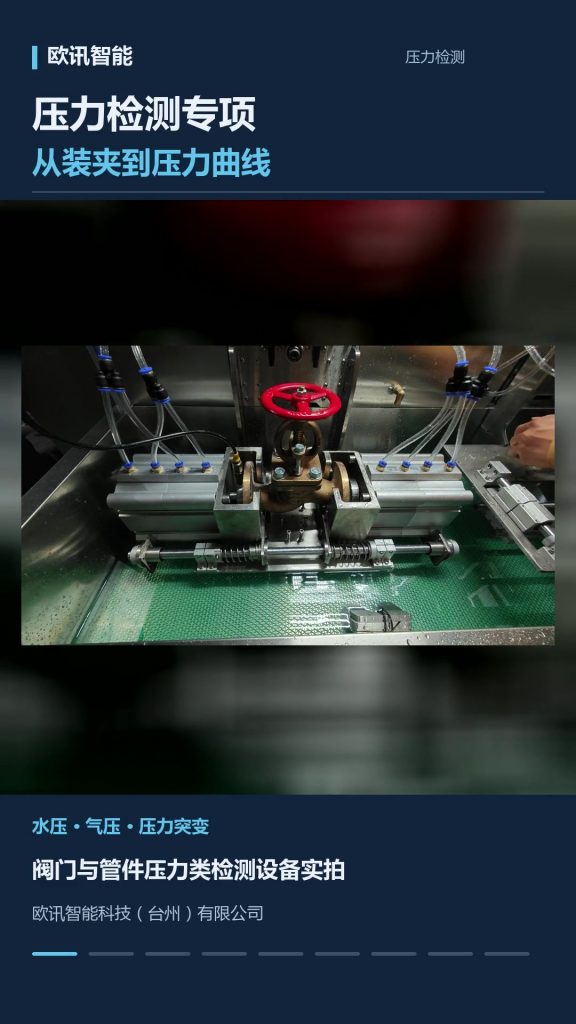
Before pressure testing, define the part, medium, pressure program, hold time and acceptance basis, then select the fixture and acquisition circuit. Water, air, pressure-shock and stepped-loading tests require different records; one pressure value is not enough for a conclusion.
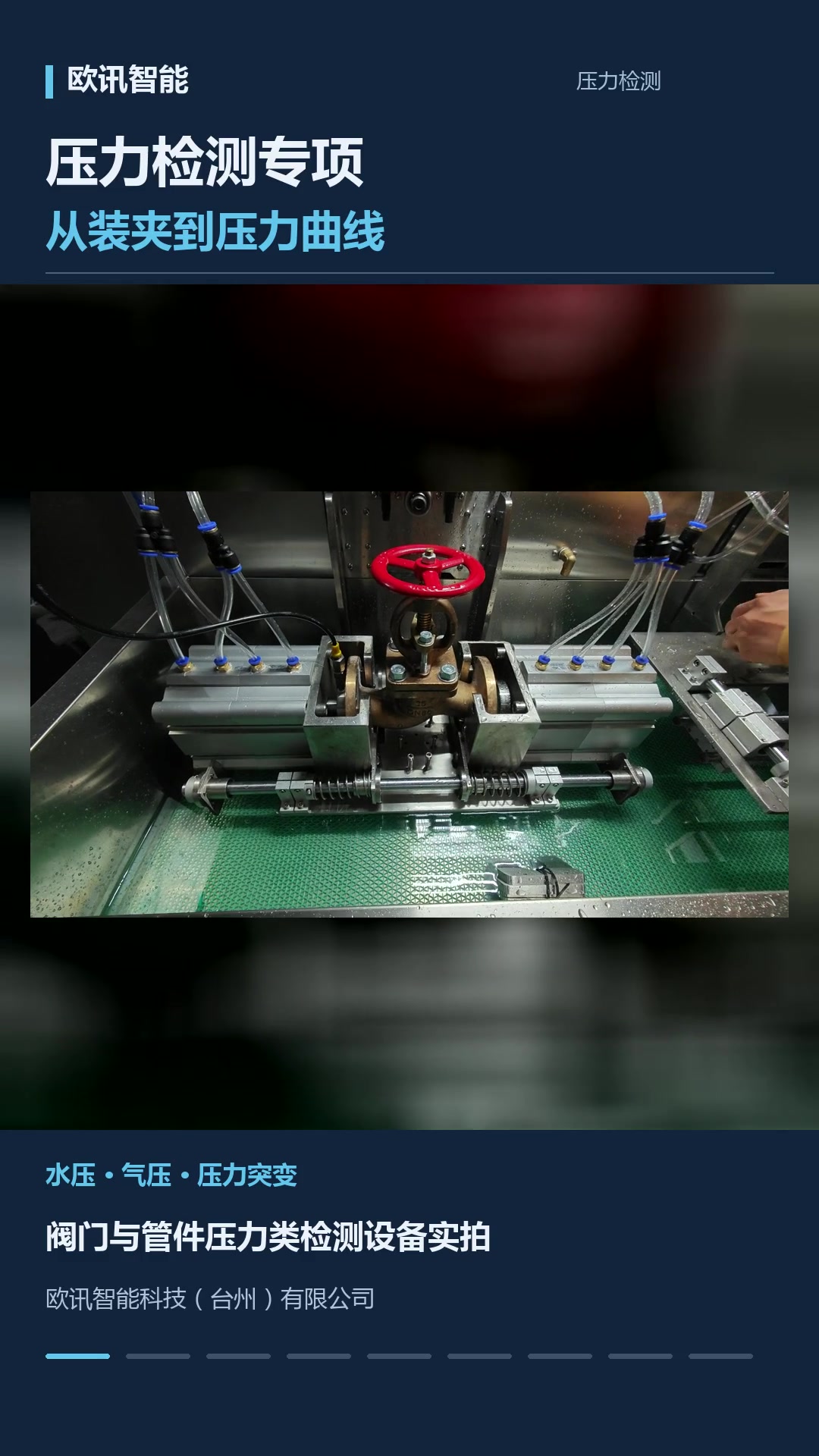
1. What should be checked in fixturing and piping?
Check interfaces, seals, plugs, fixture loading direction and guarding. Confirm the pressure sensors, valve manifold and acquisition channels, as well as the relief path and abnormal-stop conditions.
2. How do single-stage and stepped water tests differ?
A single-stage test uses one defined condition for pressurizing, holding and recording. A stepped test applies predefined levels and records setpoint, measured value, hold time and anomalies at each level. The procedure and criteria should be stated separately.
3. What needs special attention in an air test?
Gas is compressible, so risk controls and relief requirements differ from water testing. Record the medium, initial condition, pressure ramp, stabilization, pressure change, leakage observation and stop reason. Do not transfer water-test criteria directly to air.
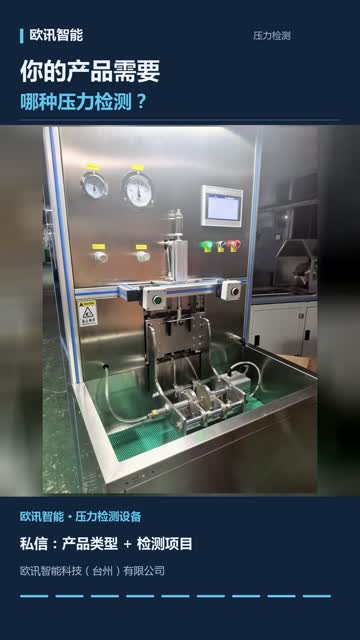
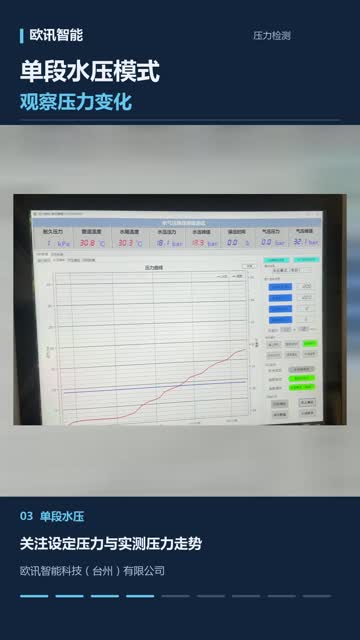
4. How should a pressure curve be reviewed?
Review setpoint, measured value, hold time, curve change and the test record together. The images come from different equipment footage and do not represent one sample completing a continuous test. They do not prove conformity or certification.
5. What information is needed for selection?
- Part type, interface size and sample quantity;
- medium, water/air pressure range and program;
- single-stage, stepped, repeated-loading or pressure-shock requirement;
- stations, sensor range, curve and report format;
- guarding, relief and traceability requirements.
Questions
Water is not air, and a pressure value alone cannot be labeled “pass” without the applicable product requirement. Leave the part, medium, pressure range and record requirements in the comments for a technical discussion.
Browse test equipment · Contact technical team
How a curve is read comes from the standard itself. Test types and acceptance criteria across the four systems are compared in the Valve Test Standards Index (GB/T, ISO, API, EN cross-reference).
Related test equipment
Each test above maps to a bench. Pick by valve type and by the item you need to prove:
- Manifold comprehensive test bench — separate circuits for the assembly and each branch, itemised records
- Valve testing equipment range — browse all models by valve type and test item