
Pendulum Impact Test Machine
Pendulum Impact Test Machine
For material specimens conforming to the selected impact-test method, to evaluate absorbed energy and fracture behaviour with a pendulum impact test for material comparison and quality inspection. Circuits and fixtures are selected for the sample and required tests.
Product Overview
Application and test scope
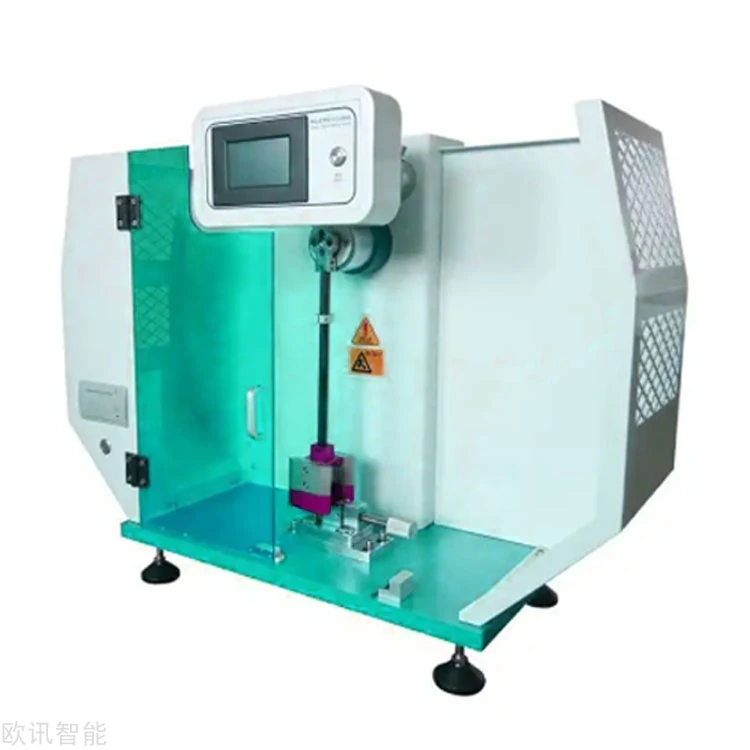
Pendulum Impact Test Machine is intended for material specimens conforming to the selected impact-test method. It is used to evaluate absorbed energy and fracture behaviour with a pendulum impact test for material comparison and quality inspection. The test arrangement is selected around the sample construction, service conditions and required evaluation method.
Tests and configuration
- Selection of pendulum, supports and impact configuration for the method
- Mounting and impact-position checks for the specified specimen geometry
- Absorbed-energy and fracture-condition records
Typical test workflow
Prepare and check specimens against the test method, confirm the corresponding impact configuration, then test and record energy and specimen condition. Apply the appropriate evaluation rules separately for each material and method.
Selection information
For a suitable proposal, provide material category, specimen geometry and notch, energy range, supports and striker, test temperature and display method. Product drawings or a sample help define connections, locating tooling and test circuits.
Measurement ranges, accuracy, automation, data interfaces and acceptance criteria are defined by the selected configuration and agreed technical proposal.
Existing equipment information
1. Main Applications
Determining impact toughness: a pendulum strikes the specimen to measure the energy absorbed under instant impact (impact absorbed energy), assessing whether the material behaves in a tough or brittle manner.
Quality control: verifying that a material or product meets impact resistance standards, such as the Charpy impact test for metallic materials.
Failure analysis: supporting the analysis of fracture behaviour under extreme loading.
2. Working Principle
Energy conversion: the pendulum is released from a preset height and falls freely to strike the specimen; the energy absorbed is derived from the difference in the pendulum’s potential energy before and after impact.
Formula: impact absorbed energy AK = mg(H1 − H2), where m is the pendulum mass, g is gravitational acceleration, and H1 and H2 are the pendulum heights before and after impact.
3. Core Structure
Pendulum system: an interchangeable striker of adjustable mass, usually supplied in several sizes to suit different test requirements.
Specimen support: a V or U-shaped anvil holds the specimen and ensures accurate impact positioning.
Energy display: a mechanical dial or digital display gives a direct reading of absorbed energy or impact toughness.
Guarding: a safety enclosure or mesh screen prevents fragments from escaping.
4. Application Areas
Metals industry: impact toughness testing of steels, aluminium alloys and similar materials (e.g. Charpy impact test).
Plastics and polymers: assessing brittleness at low temperature (e.g. ISO 179).
Automotive and aerospace: verifying the impact resistance of component materials.
Construction and bridges: testing the dynamic load tolerance of structural materials.
5. Test Standards
International: ASTM E23 (metallic materials), ISO 148-1, ISO 179 (plastics).
National: e.g. China GB/T 229 (Charpy notch impact test method for metals).
6. Operating Procedure
Specimen preparation: machine a notched specimen in accordance with the standard.
Equipment calibration: set the pendulum mass and initial angle.
Specimen mounting: fix the specimen on the anvil, ensuring correct centring.
Pendulum release: the pendulum falls freely to complete the impact.
Data reading: record the energy loss, or read the impact toughness result directly.
7. Precautions
Safety: keep the guard closed during operation to avoid injury from high-speed fragments.
Environmental control: some tests must be run inside a low-temperature chamber, such as low-temperature impact tests.
Periodic calibration: keep errors from pivot friction and air resistance within the permitted limits.
8. Technical Advantages
High accuracy: digital models calculate and store data automatically, reducing operator error.
Versatility: interchangeable pendulums and supports adapt the machine to different materials and standards.
Interested in this equipment?
Tell us your testing needs — we will tailor a solution for you
Email Inquiry