
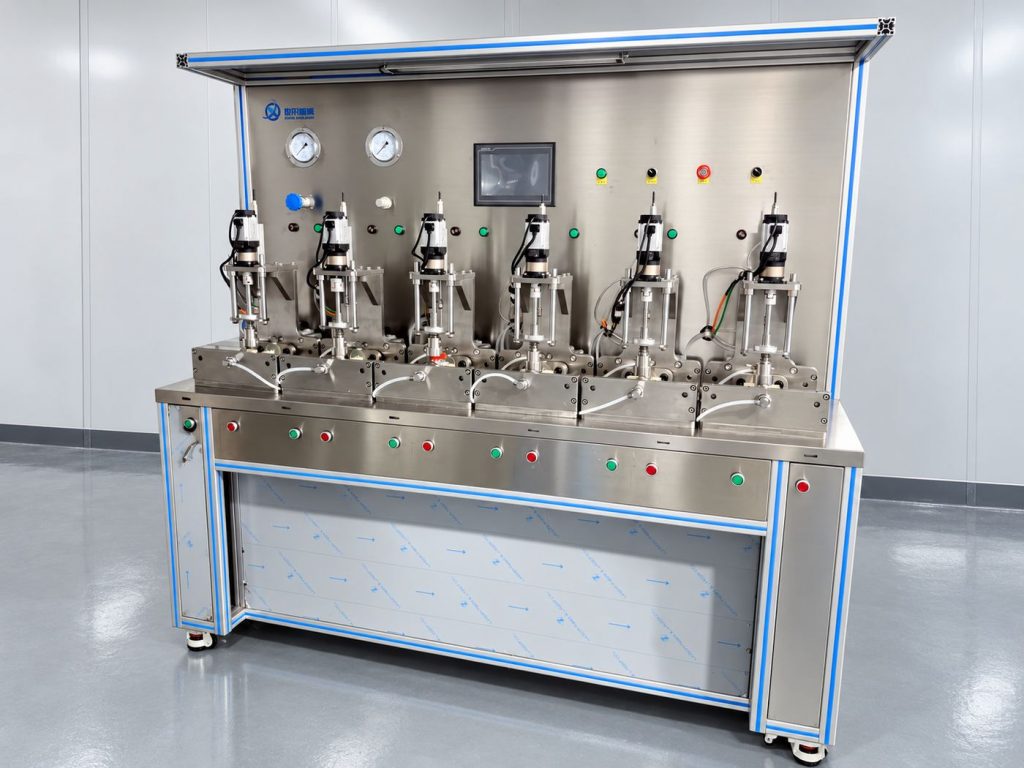
Most pressure-test problems on valves are not a shortage of pump capacity. They come from the test item, the medium, the pressure-tap location and the acceptance rule not being aligned before the fixture closes. This article works through the current GB/T 13927-2022, Industrial valves — Pressure testing, and sets out what the shell test, the backseat test and the closure test each answer, and how to turn the results into a record you can still defend a year later. The standard text can be checked in the national standards full-text system.
What GB/T 13927-2022 actually covers
The standard is titled “Industrial valves — Pressure testing”. The current edition was published on 30 December 2022 and took effect on 1 July 2023, replacing GB/T 13927-2008. On a real order it supplies the framework only. Which valve type you have, which test items apply and what counts as acceptable still come from the product standard, the purchase specification and the buyer’s technical agreement.
One distinction is worth holding from the first line of the work instruction. A shell test with no leakage says the pressure boundary holds; it says nothing about whether the disc seals. The backseat test applies only to valves built with a backseat structure. Three results, three separate lines in the record — folding them into a single “passed” is where acceptance arguments begin.
Four things to settle before the fixture closes
- The object. Model, size, pressure class, body material and serial number.
- The medium. Water or gas, plus cleanliness, temperature and how trapped air is to be vented.
- The measurement chain. Range, accuracy, calibration status, and where the tap actually sits on the valve.
- The acceptance rule. Allowable leakage, observation method and hold time, taken from the standard, the product standard or the agreement — written down, not remembered.
If the tap sits upstream of the fixture instead of on the cavity, you are measuring the bench rather than the valve. That one detail accounts for a good share of “the gauge was fine but the customer rejected it” conversations.
Running the shell test
The shell test checks the body, the bonnet and their joints under test pressure. Lock the fixture, vent the line, confirm the safety interlock, then pressurise according to the work instruction rather than by feel. Log the curve as it rises. During the hold, watch the external surfaces, the joints and any visible area; afterwards release pressure in the defined sequence instead of dumping it.
Two mistakes repeat themselves. Trapped air makes the curve wander, and a wandering curve gets read as a leaking valve. And the pressure at the pump outlet is not the pressure in the cavity — across a long hose and a restricted path the two can differ by enough to flip the verdict at the margin. Reading the pressure curve is worth practising before it is needed in an argument.
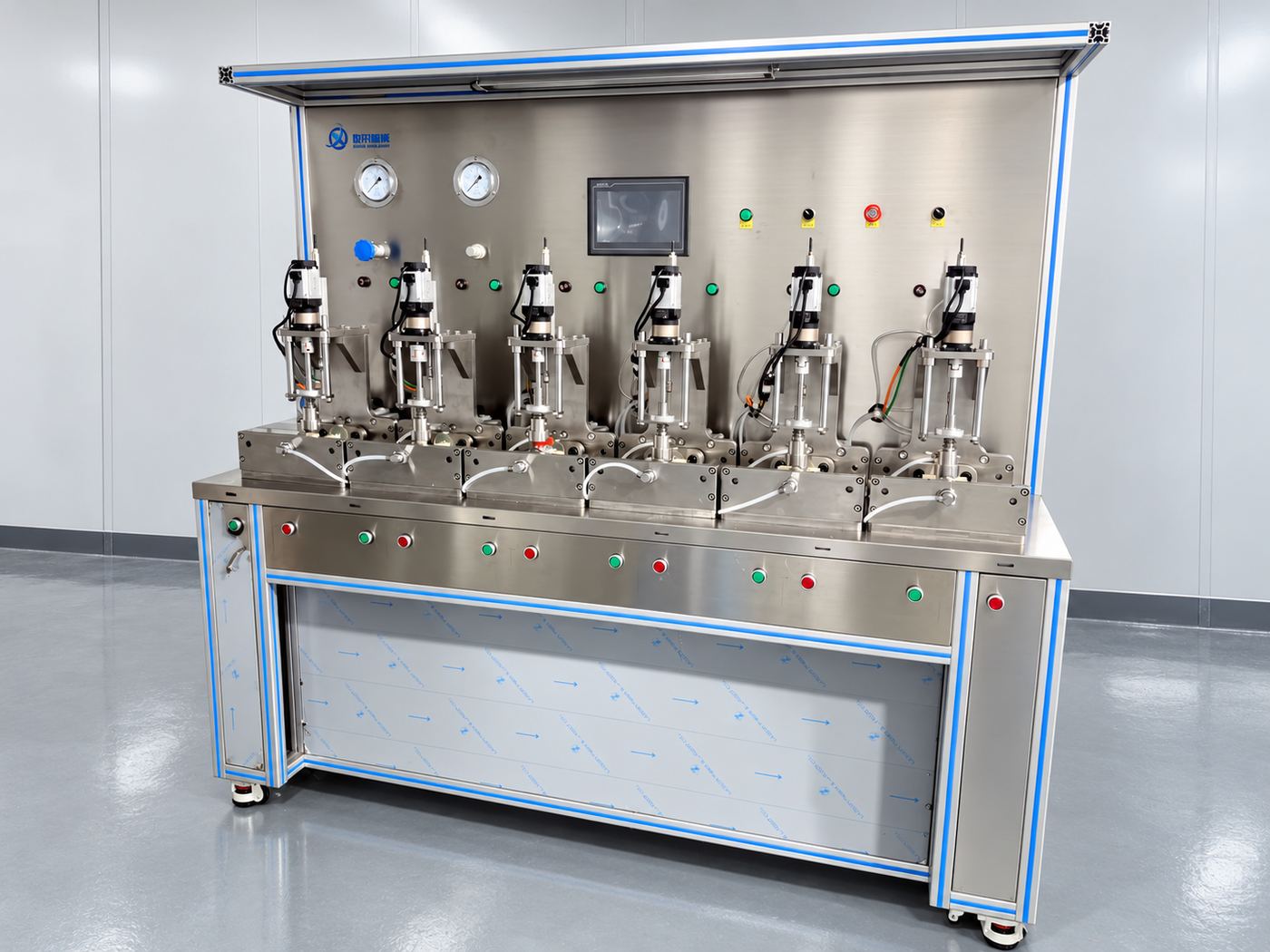
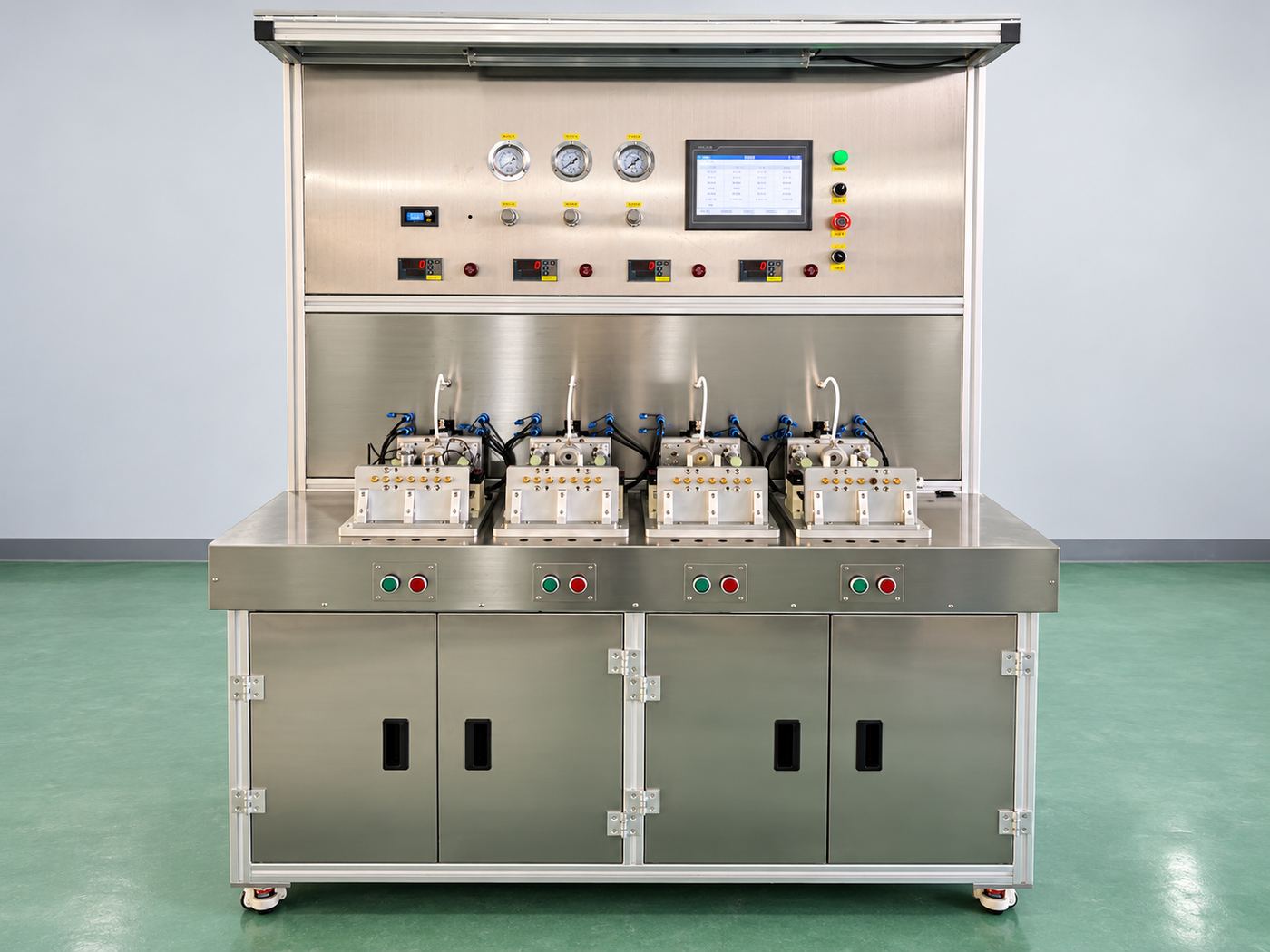
On a multi-station bench, give every station its own pressure acquisition and isolation. Shared manifolds are cheaper to build and much harder to defend: a slow leak at station three reads as a pressure drop everywhere, and the operator ends up blaming the valve.
What the closure test is really judging
The closure test is about what happens after the valve closes. Test direction, disc position, stabilisation time, observation method and allowable leakage follow the standard and the product requirement, and they differ between a hydrostatic and a gas test. The same judgment cannot be carried across: a bubble rate that is normal in air may mean nothing in water, and the reverse. Where the contract names a leakage class rather than a bubble count, the ISO 5208 leakage classes are the ones usually being referenced, and gas testing carries its own failure modes.
For valves that must seal in both directions, test and record each side separately. One number covering both directions hides which seat is at fault — precisely the information the customer needs when they send the valve back.
If the bench works by flow measurement or pressure decay, the software should keep the raw samples, the stabilised segment and the final value. If the call is visual, the record still needs the medium, the observation time and who made it. A report that shows only “OK” is not traceable.
How to configure the bench
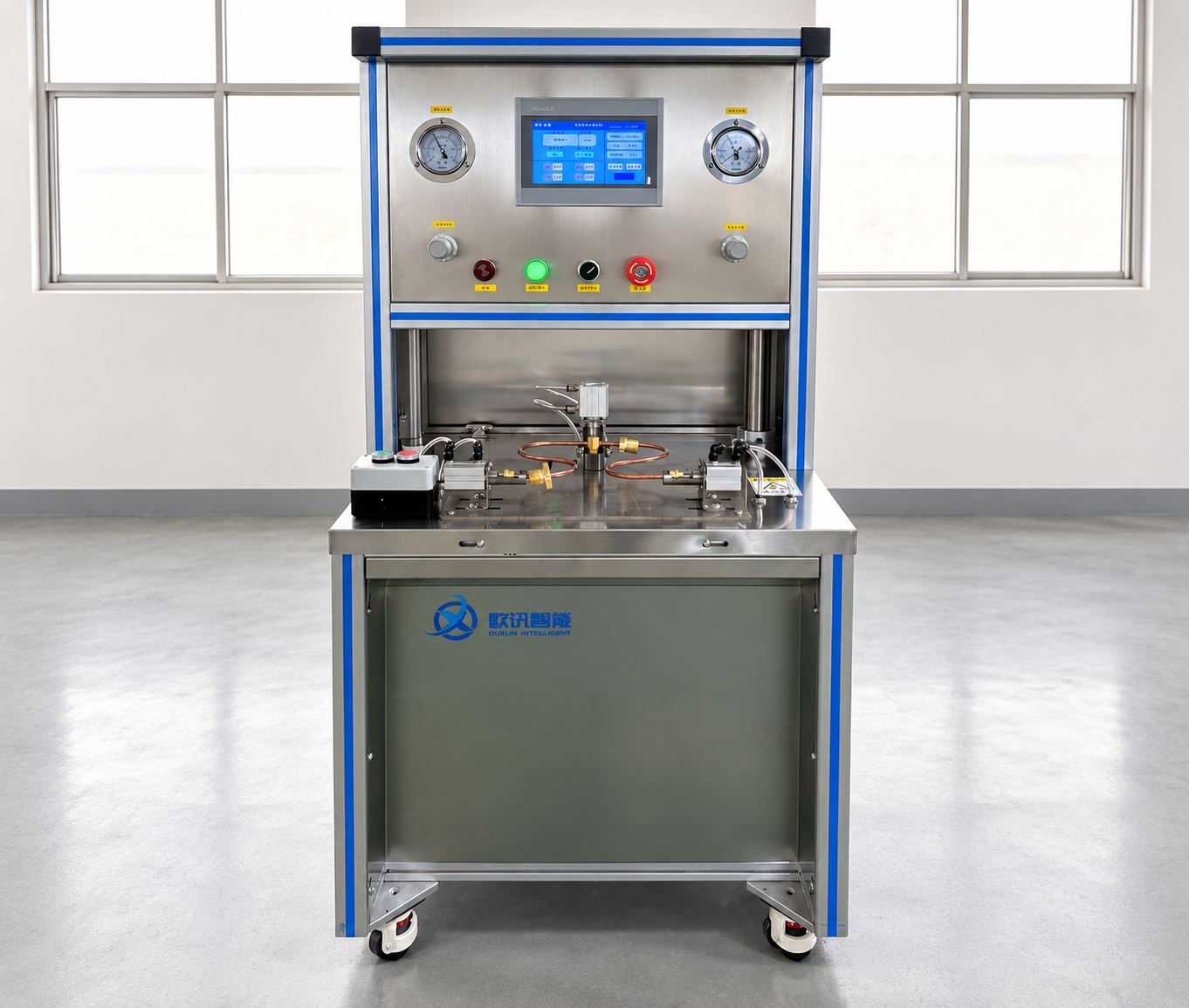
- Pressure source. Intensifier, regulator and vent unit sized for the medium and the target pressure.
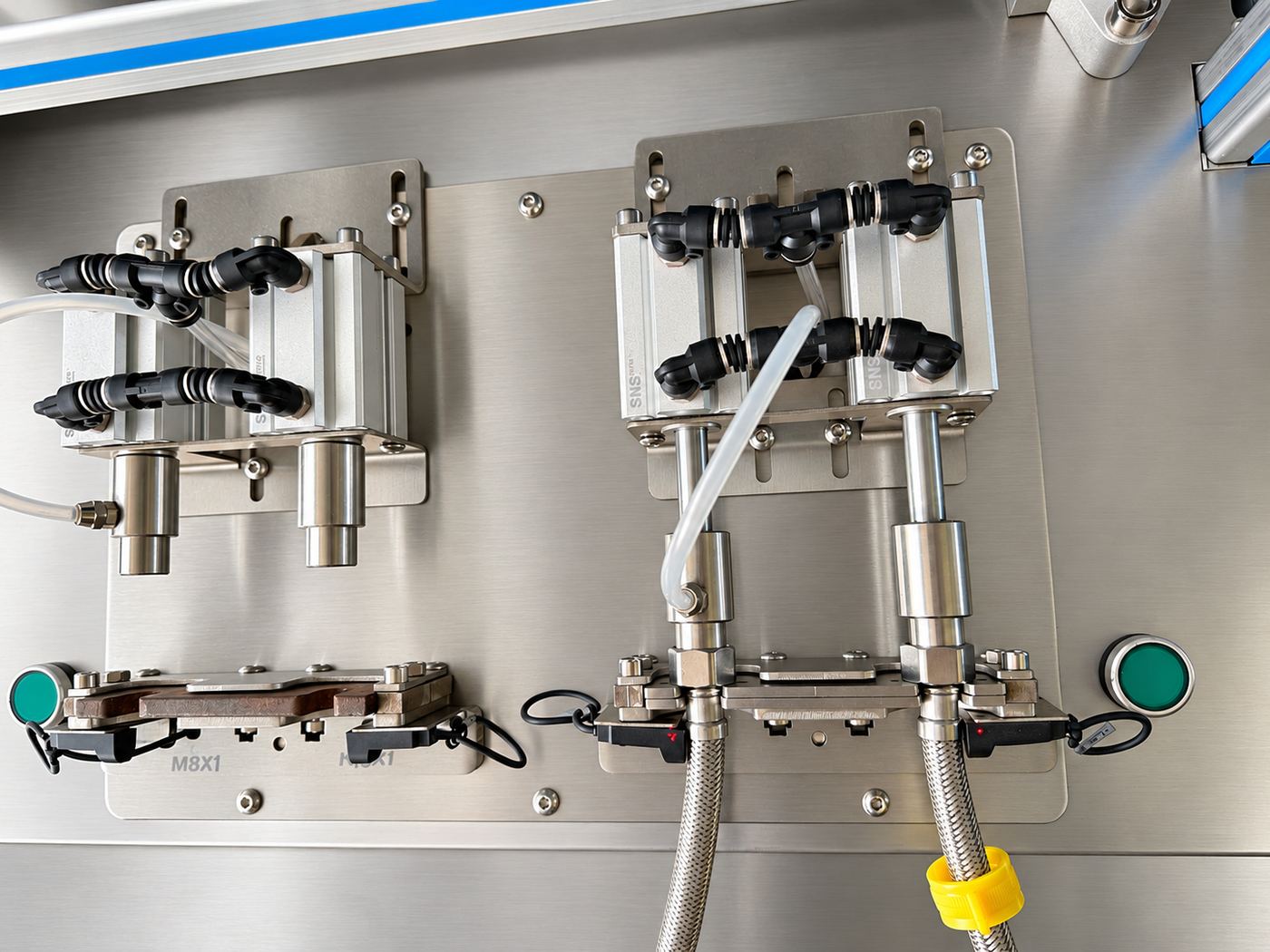
- Fixtures. Quick-change tooling by size, end connection and body design, and a fixture that does not add leakage of its own.
- Measurement. Calibrated pressure, flow or leak elements, with range and calibration data retained next to the result.
- Safety. Guard door, overpressure protection, E-stop and a defined vent path for faults.
- Records. Recipe, curve, verdict and operator tied to the valve serial number, exportable without manual transcription.
What to check at acceptance
Acceptance should not stop at “it reached the pressure”. Run a complete cycle on a customer sample — load, vent, pressurise, hold, judge, release, save, export — and watch each step instead of the summary. On a project covering several sizes, add changeover time, fixture repeat position and data consistency after switching ranges. Those three decide whether the bench still produces comparable numbers in month six.
FAQ
Can the values in the standard be applied to every valve?
No. Test items and acceptance conditions depend on valve type, product standard, pressure class and the technical agreement. The recipes on the bench should stay editable per project rather than frozen at commissioning.
Can gas testing and hydrostatic testing share one bench?
Parts of the control and recording system can be shared. The medium circuit, venting and depressurisation, safety enclosure and judgment method should not be treated as one design — gas stores far more energy at the same pressure, and a fixture that is acceptable for water is not automatically acceptable for air.
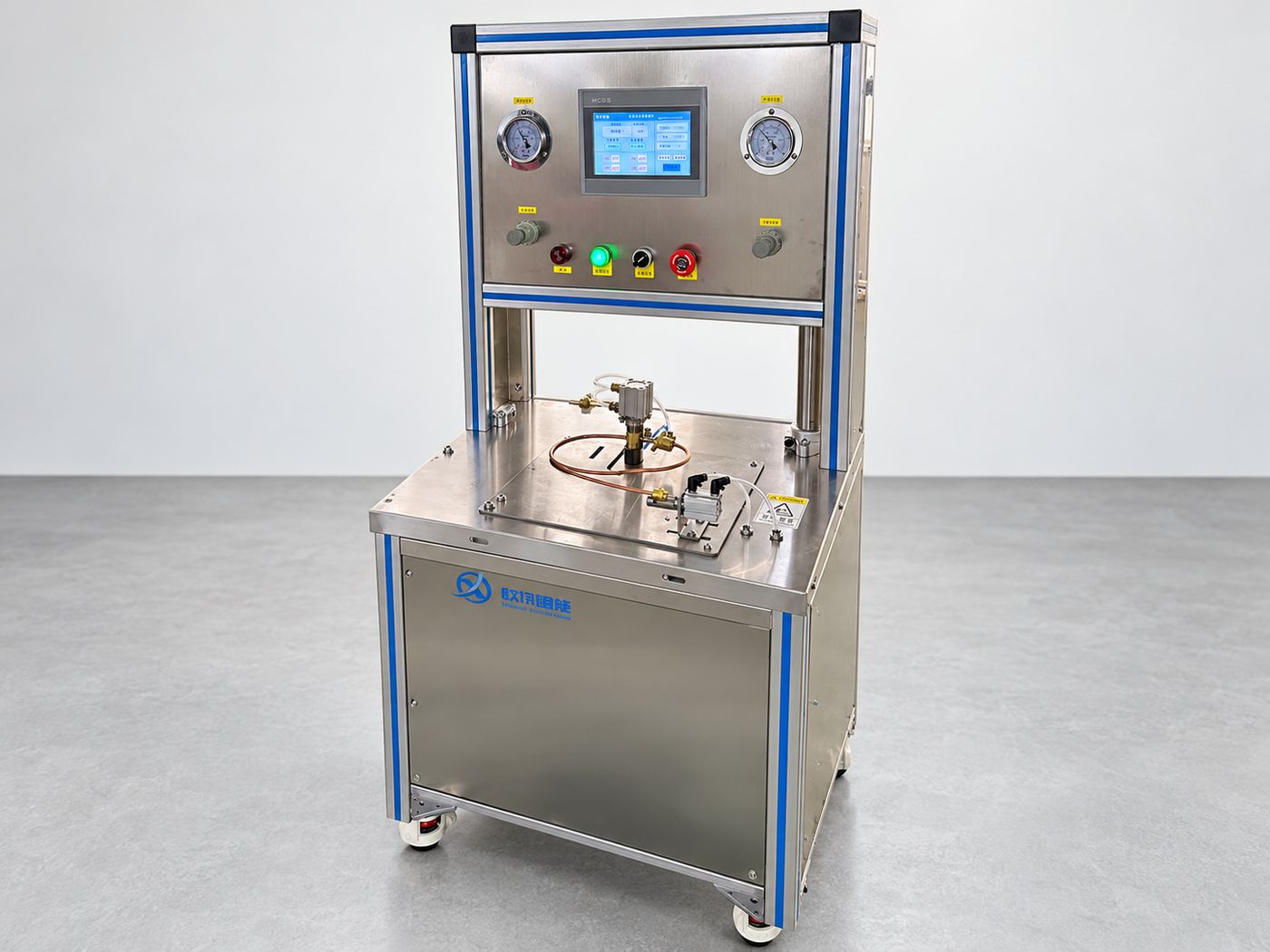
Ouxun Intelligent Technology (Taizhou) builds shell, closure, flow and life test benches around valve type, size, medium, pressure class and cycle time. Where pressure, hold time, allowable leakage or fixture interface are not yet fixed, settle them during sample testing and the technical agreement rather than after the purchase order.
For where GB/T 13927-2022 sits among the four systems, and how it maps to ISO 5208 and API 598, see the Valve Test Standards Index (GB/T, ISO, API, EN cross-reference).
Related test equipment
Each test above maps to a bench. Pick by valve type and by the item you need to prove:
- Valve pressure test machine — shell at 1.5x and seat at 1.1x, with a report per valve
- Valve flow test system — flow and differential pressure per opening to derive Cv/Kv
- Manifold comprehensive test bench — separate circuits for the assembly and each branch, itemised records
- Valve testing equipment range — browse all models by valve type and test item