
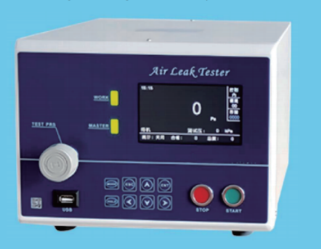
A scene from a factory audit: the technical agreement says “seat test per ISO 5208, leakage Rate A”. The bench runs pressure decay. The auditor asks what the allowable leakage for Rate A is and how the result proves compliance. Nobody on the floor can answer – pressure decay cannot resolve anything at that level. The class was written on paper, but it cannot be demonstrated.
That is the core mistake: treating a leakage class as a slogan. In ISO 5208 the leakage rates form a numerical system with units and test conditions attached. Class, medium, pressure, duration, detection method – leave any one out and the verdict cannot be executed. This article tabulates all ten classes and then works through the places projects most often go wrong.
The full table: ten classes, not seven
Most references list seven classes, A through G. Table 4 of ISO 5208:2015 actually defines ten: A, AA, B, C, CC, D, E, EE, F, G. The three extra ones – AA, CC, EE – are routinely missed, and they are exactly the ones the API 598 correspondence needs.
| Class | Liquid (mm³/s) | Liquid (drops/s) | Gas (mm³/s) | Gas (bubbles/s) | In EN 12266-1? |
|---|---|---|---|---|---|
| A | No visible leakage during the test | — | No visible leakage | — | Yes |
| AA | 0.006×DN | 0.0001×DN | 0.18×DN | 0.003×DN | No |
| B | 0.01×DN | 0.00016×DN | 0.3×DN | 0.0046×DN | Yes |
| C | 0.03×DN | 0.0005×DN | 3×DN | 0.0458×DN | Yes |
| CC | 0.08×DN | 0.0013×DN | 22.3×DN | 0.3407×DN | No |
| D | 0.1×DN | 0.0016×DN | 30×DN | 0.4584×DN | Yes |
| E | 0.3×DN | 0.0048×DN | 300×DN | 4.5837×DN | Yes |
| EE | 0.39×DN | 0.0062×DN | 470×DN | 7.1293×DN | No |
| F | 1×DN | 0.016×DN | 3000×DN | 45.837×DN | Yes |
| G | 2×DN | 0.032×DN | 6000×DN | 91.673×DN | Yes |
Three things in this table deserve to be spelled out.
First, every allowance is multiplied by DN. The same class allows six times more leakage at DN300 than at DN50. A class stated without a size is an incomplete specification.
Second, Rate A is not zero. The standard’s wording is “no visually detectable leakage for the duration of the test” – no visible droplets, seepage or bubbles. It means “not detectable” under the stated observation conditions, not a mathematical zero. If a contract says “zero leakage”, tie it back to this definition in writing.
Third, AA, CC and EE exist only in ISO 5208. If the European customer’s contract references EN 12266-1, those three classes have no counterpart there. Check which standard the contract cites before quoting.
What the numbers mean on the shop floor
mm³/s is not a unit anyone reasons in. 1 mm³/s = 0.06 mL/min = 3.6 mL/h. Taking Rate D, liquid test, as the workaday example:
| DN | Allowance (mm³/s) | In mL/h | Roughly |
|---|---|---|---|
| DN50 | 5 | 18 | a third of a teaspoon per hour |
| DN100 | 10 | 36 | two teaspoons per hour |
| DN200 | 20 | 72 | four and a half teaspoons per hour |
| DN300 | 30 | 108 | nearly half a cup per hour |
Now the other end. Rate AA, liquid, on a DN50 valve: 0.006×50 = 0.3 mm³/s = 1.08 mL/h – one droplet an hour, give or take. At that level eyesight and measuring cups both fail; what equipment can resolve it is covered below.
One more conversion trap: DN is a nominal designation, not the flow bore. Drawings marked in NPS have to be converted to the equivalent DN per Annex A of ISO 5208 before entering the table. Do not treat NPS3 as DN75 – the sizes sit one step apart. The relationship between designations and test pressure selection is covered in the PN, CWP and test pressure note.
Soft seats and metal seats are not judged on the same line
The first input to class selection is the seat material:
- – Soft seats (PTFE, EPDM, NBR and other elastomers): normally specified at Rate A. A sound elastomeric seat can genuinely show no visible leakage; failing Rate A usually points to a seat defect.
- – Metal seats: Rate A is not realistically achievable. Metal-to-metal seals rely on micro-deformation at the contact line, and product standards typically allow Rate C through E, relaxed by size and duty.
The spread between the two is wide. On the same DN100 valve, Rate A means “no visible leakage” while Rate E allows 0.3×100 = 30 mm³/s = 108 mL/h. Run one acceptance line across both seat types and you will misjudge one side and under-detect the other – the point made repeatedly in the selection guide.
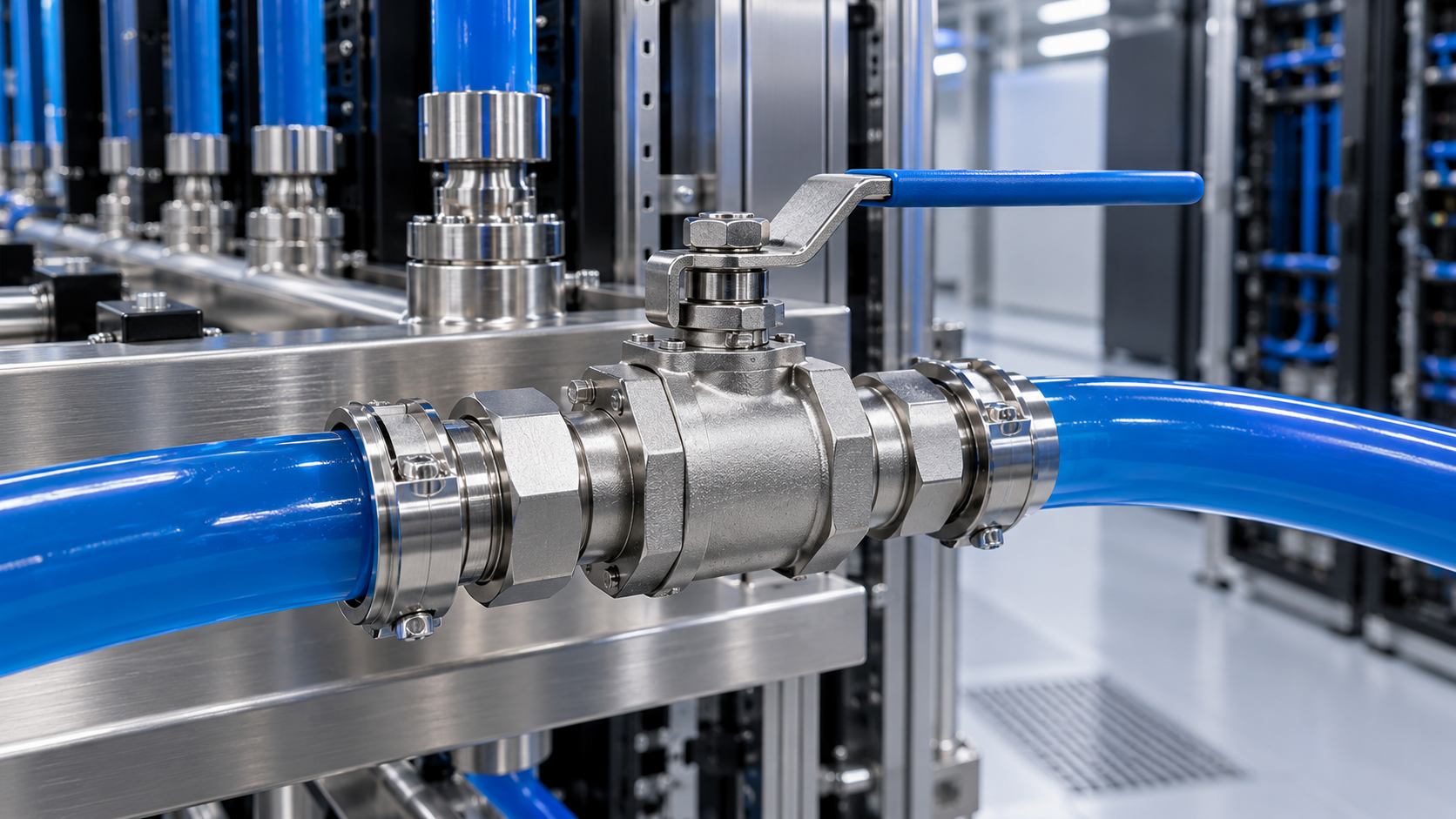
Ball valves show the difference most clearly: the same body, soft seat specified at Rate A, metal seat at Rate C, and the acceptance outcome is a different world.
For a specific valve type, look at its product standard first (gate valves per GB/T 12234, ball valves per GB/T 12237, and so on). Where the product standard states a class, it governs. Where it does not, the purchaser’s specification applies, and it may be tighter than the standard.
Class alone is not executable: four conditions must accompany it
The same valve at the same class gives different results under different conditions. ISO 5208 fixes the following:
Test pressure. Not less than 1.1 times CWP for liquid tests; for gas tests, 1.1 times CWP or 6 bar ± 1 bar as the standard prescribes. Note it is CWP, not PN – PN is a pressure class identifier, CWP is what the body material actually holds. Confusing the two goes wrong on cast iron bodies.
Test duration. For isolation valves, banded by size: 15 s at DN≤50, 60 s for DN65-150, 120 s at DN≥200. Check valves get longer: 60 s up to DN150 and 120 s at DN≥200. Cut the duration short and micro-leakage has not had time to show – a false pass. The full hold-time bands by size are in the size-banded reference table.
Medium. Water (possibly with a corrosion inhibitor) for liquid tests; air or nitrogen for gas tests. Passing on water and failing on air happens often enough to plan for – gas molecules are smaller and the viscosity is roughly a fiftieth of water’s. If the service medium is gas, do not test with water only.
Detection method. How the leakage is measured decides whether the result can be trusted at all – next section.
One clause that gets misread: the tabulated allowances apply only when the test medium discharges to atmosphere. A bubble-immersion setup and a direct observation to atmosphere are different judgement setups, so the method has to be recorded with the result.
Can your equipment actually prove the class
This is the calculation to run before signing. The higher the class, the steeper the requirement on the measurement side:
| Class range | Scale (DN100 liquid example) | Methods that can demonstrate it |
|---|---|---|
| F, G | 100-200 mm³/s | Visual observation and timed collection |
| D, E | 10-30 mm³/s | Pressure decay, workable with temperature control and adequate hold |
| B, C | 1-3 mm³/s | Flow measurement (make-up flow) |
| AA, CC | 0.3-8 mm³/s | High-resolution flow or differential pressure methods |
| A | No visible leakage | Observation gives a qualitative verdict; quantitative needs helium mass spec |
Two practical notes.
Temperature is where pressure decay breaks. In a 5-litre cavity, a 1°C drift moves the pressure reading by several times a Rate D allowance. Any quantitative verdict at Rate C or tighter needs temperature compensation or isothermal handling – the failure modes are laid out in the seven causes of unstable air-tightness results. The trade-offs between the five detection methods are compared in this method comparison.
Instrument resolution has to match the class. To resolve 0.3 mm³/s (Rate AA at DN50), the flow meter or transducer needs resolution at least an order of magnitude below that value, plus a valid calibration certificate. The certificate checklist is in the calibration and traceability note. When the equipment cannot resolve the class, the project stalls at “cannot demonstrate it” – a common way audits fail.
How it maps to API 598 and EN 12266-1
Export projects will hit this. ISO 5208, Note 4, states the correspondence with API 598:
| API 598 case | Corresponding ISO 5208 rate |
|---|---|
| Valves DN≤50 | Rate A |
| Other metal-seated valves (gas) | Rate AA |
| Other metal-seated valves (liquid) | Rate CC |
| Check valves (gas) | Rate EE |
| Check valves (liquid) | Rate G |
Two cautions. The standard itself calls this a correspondence, and the industry widely treats it as loose – use it as a starting point when drafting a specification and verify item by item, do not equate the two. And note that the check valve classes are visibly wider than the others; one leakage specification cannot cover a whole valve programme.
Against EN 12266-1 the mapping is direct: the values for A, B, C, D, E, F and G are identical, and AA, CC, EE exist only in ISO 5208. When a European contract cites EN 12266-1, keep Rate AA out of the paperwork.
For GB/T 13927-2022, the Chinese standard’s acceptance system aligns with ISO 5208; the clause-by-clause reading in this GB/T 13927 walkthrough covers the relationship.
Writing the verdict down: seven fields
A test record has to let two people, on two machines, a week apart, reach the same conclusion. At minimum:
| Field | Example |
|---|---|
| Standard and class | ISO 5208:2015 Rate D (liquid) |
| Valve identification | Model, DN, pressure class, seat material, batch |
| Test medium | Water (ambient) or air/nitrogen |
| Test pressure | 1.1×CWP, value x.x MPa |
| Duration | 120 s (DN≥200 band) |
| Method and instrument | Flow method, instrument model, certificate number and validity |
| Measured value and verdict | x.x mm³/s against y×DN limit, pass/fail |
A record that only says “no leakage, pass” will not survive a third-party audit. And remember that factory release, type testing and post-repair checks judge at different strictness – the boundaries are set out in the test scope planning note.
Frequently asked questions
The customer only wrote “no leakage”. Now what?
Translate it at drawing-review stage: which standard, which class, which medium, what pressure, how long, measured how. If it cannot be translated, send a clarification request. Doing this at audit time costs ten times more.
The valve passes on water and leaks on air. Is that normal?
Normal, and common. Gas has lower viscosity and smaller molecules, so the measured leakage is typically far higher on gas. Read the contract first – if the service medium is gas, gas testing is mandatory. When the gap looks too large, work through the five leak points checklist to rule out fixtures and piping before blaming the valve.
Can pressure decay prove Rate A?
No. Rate A is defined as “no visible leakage” – an observational verdict. Bubble immersion is the standard-recognised route, provided the observation duration and lighting are fixed. For a quantitative high-class verdict, use flow measurement or helium leak detection.
How do we specify the equipment’s class capability at purchase?
Write the highest class, smallest DN and medium into the technical agreement, and require the supplier to run a validation test on your sample parts with the measured data attached. The item-by-item questions are in the supplier evaluation checklist.
For valve, HVAC and sanitary, automotive parts or materials testing equipment, contact Ouxun Intelligent Technology (Taizhou) Co., Ltd. at sales@ouxunzn.com.
Reference note: this article summarises Table 4 and related clauses of ISO 5208:2015 (Industrial valves – Pressure testing of metallic valves) for selection and acceptance communication. For specific projects, the formally cited standard edition, product standard and technical agreement govern.
Leakage classes are only one item across the four systems. For the lineage and current editions of ISO 5208, GB/T 13927, API 598 and EN 12266-1, see the Valve Test Standards Index (GB/T, ISO, API, EN cross-reference).
Related test equipment
Each test above maps to a bench. Pick by valve type and by the item you need to prove:
- Valve pressure test machine — shell at 1.5x and seat at 1.1x, with a report per valve
- Pipe and connection leak test bench — pressure-decay and helium methods, judged against a leak-rate limit
- Valve comprehensive test bench — pressure, tightness, flow, torque and life cycling on one clamping system
- Valve testing equipment range — browse all models by valve type and test item