
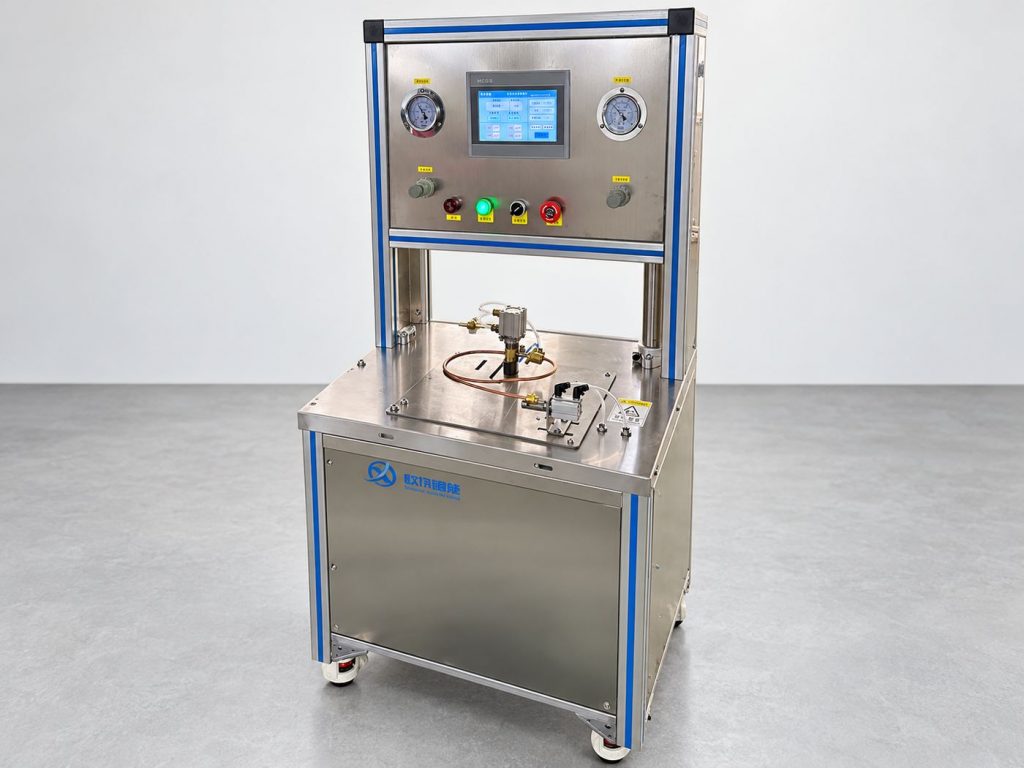
A recent case from the test floor: a batch of DN100 metal-seated ball valves passed factory testing to GB/T 13927, then failed re-inspection when the export customer asked for API 598. Nothing on the valves changed. What changed was the definition of “acceptable” — and the two standards define it differently.
Anyone exporting valves runs into this. European customers tend to write EN 12266-1 into the purchase order, Middle East and Southeast Asian customers tend to write API 598, and domestic projects use GB/T 13927. Put the resulting test reports side by side and the pressures, leak rates and hold times all disagree. This article walks through API 598 (10th Edition, 2016) against GB/T 13927-2022 item by item: where they differ, how to convert between them, and what to write into the contract.
The three differences that actually matter
| Dimension | API 598 (11th ed.) | GB/T 13927-2022 |
|---|---|---|
| Pressure basis | Rating at 38 °C (ASME Class system) | Cold working pressure CWP at ambient (PN system) |
| Leakage acceptance | Drops/min and bubbles/min, counted and looked up by size | Ten rate classes A–G in mm³/s × DN |
| Position | Self-contained inspection and testing standard, citable as-is | Generic baseline standard, invoked by product standards (GB/T 12234, 12237, etc.) |
GB/T 13927-2022 is a modified adoption (MOD) of ISO 5208:2015, so its rate classes, test pressures and hold times line up with ISO 5208 — and mostly with EN 12266-1 as well. The full ten-class leakage table is in our ISO 5208 rate classes article; here we focus on converting between the two systems.
Shell test: both say “1.5 ×”, but they multiply different numbers
Both standards set the hydrostatic shell test at 1.5 times and the seat test at 1.1 times. But API 598 multiplies the pressure rating at 38 °C from the ASME B16.34 pressure-temperature tables, while GB/T 13927 multiplies CWP — the maximum allowable working pressure at ambient temperature. Different bases, different results.
Worked out for the two most common classes:
| Class | Basis pressure | API 598 shell (×1.5) | GB/T 13927 shell (×1.5) | API 598 seat (×1.1) | GB/T 13927 seat (×1.1) |
|---|---|---|---|---|---|
| Class 150 | 19.6 bar at 38 °C | 29.4 bar, rounded up to 31.0 bar | — | 21.6 bar | — |
| PN16 | 16 bar ambient | — | 24 bar | — | 17.6 bar |
| Class 300 | 51.1 bar at 38 °C | 76.7 bar, ≈77 bar rounded | — | 56.2 bar | — |
| PN40 | 40 bar ambient | — | 60 bar | — | 44 bar |
The same “150 lb” valve is tested at 31 bar under API 598 but 24 bar under GB/T 13927 aligned to PN16 — a 7 bar gap. Neither is “stricter”; the two rating systems simply anchor at different temperatures. On dual-standard orders, either run each test at its own basis or take the higher of the two, but state which clause the pressure comes from.
One more detail: API 598 requires steel-valve shell test pressures to be rounded up to the next 25 psig increment. GB/T 13927 has no such rounding rule, which is why Class 150 works out to 31 bar rather than 29.4.
Seat leakage: counting drops versus measuring mm³/s
This is the most substantive difference.
API 598 acceptance is counting-based: resilient-seated valves must show zero leakage; metal-seated valves get a table — count drops for liquid tests (1 mL ≈ 16 drops) and count bubbles underwater for gas tests. For metal-seated valves other than checks the rule is simple: from NPS 2½ upward, 2 drops/min per inch of NPS for liquid and 4 bubbles/min per inch for gas, with zero required at NPS 2 and below.
GB/T 13927-2022 acceptance is quantitative: it takes over the ISO 5208 rate classes A–G, with allowable leakage written as a coefficient × DN in mm³/s. That converts to mL/h, can be measured directly with a flow meter or differential-pressure instrument, and can be coded into a data-acquisition program for automatic pass/fail.
API 598 closure-test leakage allowances, metal-seated valves:
| DN | NPS | Metal, non-check: liquid | Metal, non-check: gas | Metal check: liquid | Metal check: gas |
|---|---|---|---|---|---|
| ≤50 | ≤2 | 0 drops/min | 0 bubbles/min | 6 cm³/min | 0.08 m³/h |
| 65 | 2½ | 5 drops/min | 10 bubbles/min | 7.5 cm³/min | 0.11 m³/h |
| 80 | 3 | 6 drops/min | 12 bubbles/min | 9 cm³/min | 0.13 m³/h |
| 100 | 4 | 8 drops/min | 16 bubbles/min | 12 cm³/min | 0.17 m³/h |
| 150 | 6 | 12 drops/min | 24 bubbles/min | 18 cm³/min | 0.25 m³/h |
| 200 | 8 | 16 drops/min | 32 bubbles/min | 24 cm³/min | 0.34 m³/h |
| 300 | 12 | 24 drops/min | 48 bubbles/min | 36 cm³/min | 0.50 m³/h |
| ≥350 | ≥14 | 2 × NPS drops/min | 4 × NPS bubbles/min | 3 × NPS cm³/min | 0.042 × NPS m³/h |
Resilient-seated valves (PTFE, rubber and other soft seats) sit in slightly different places in the two systems: API 598 requires zero leakage outright, while GB/T 13927 maps them to rate class A — no detectable visible leakage during the test duration.
One caution on bubbles: bubbles/min is a shop-floor visual counting unit, and the assumed volume per bubble varies between practitioners (anywhere from 0.01 to 0.06 mL). Counting works for quick screening, but when it comes to contracts and reports, prefer units with a firm definition — mL/min or mm³/s. For instrument-based options, see how to choose a leak-test method.
Converting API 598 into GB/T 13927 classes: metal seats land on CC and AA
The two acceptance systems can be translated. Convert the API 598 limits into “coefficient × DN” form and match them against the ISO 5208 table:
| API 598 acceptance | Conversion | Result | GB/T 13927 equivalent |
|---|---|---|---|
| Metal, non-check, liquid: 2 drops/min × NPS | 2 drops = 0.125 mL/min ≈ 2.08 mm³/s, normalized by size | ≈0.08 × DN | ≈ class CC (0.08 × DN) |
| Metal, non-check, gas: 4 bubbles/min × NPS | Using the ISO 5208 bubble equivalent (1 bubble ≈ 0.06 mL) | ≈0.16 × DN | ≈ class AA (0.18 × DN) |
| Metal check, liquid: 3 cm³/min × NPS | 3000 mm³/min ÷ 60 s, normalized | ≈2.0 × DN | ≈ class G (2 × DN) |
| Metal check, gas: 0.042 m³/h × NPS | Converted to mm³/s and normalized | ≈460 × DN | ≈ class EE (470 × DN) |
A concrete comparison at DN100 (NPS 4): API 598 allows 8 drops/min = 0.5 mL/min = 30 mL/h, while GB/T 13927 class CC allows 0.08 × 100 = 8 mm³/s = 28.8 mL/h. Nearly identical — the API 598 liquid criterion for metal seats sits almost exactly on class CC.
Two practical consequences. First, do not assume API 598 is the lenient one. Converted to liquid terms it lands on class CC — one class tighter than the D level (0.1 × DN) many buyers default to — and on gas it is near AA. A valve that passes GB/T 13927 at class D can legitimately fail an API 598 re-check, which is exactly what happened to the ball valves in the opening story. Second, the conversion works in reverse: if the contract says class B gas (0.3 × DN) to GB/T 13927, a valve that has already passed API 598’s gas test carries margin, and that margin is worth stating in the quotation.
Hold times: each standard is stricter somewhere
Minimum hold times, seconds:
| DN | API 598 shell | API closure (non-check) | API closure (check) | GB/T 13927 shell | GB/T 13927 closure |
|---|---|---|---|---|---|
| ≤50 | 15 | 15 | 60 | 15 | 15 |
| 65–150 | 60 | 60 | 60 | 60 | 60 |
| 200–300 | 120 | 120 | 120 | 120 | 120 |
| 350–600 | 300 | 120 | 120 | 300 | 300 |
| >600 | 600 | 240 | 240 | 300 | 300 |
Two gaps matter. At DN 350 and above, API 598 asks only 120 s for the closure test while GB/T 13927 wants 300 s — an API-format report submitted against a GB/T acceptance falls short and the test must be repeated. Small check valves go the other way: API 598 demands 60 s from the start, GB/T 13927 only 15 s. Hold time strongly affects the measured leak rate, particularly for underwater bubble counting; we covered this in how long to hold a valve pressure test.
Low-pressure air seat test: 80 ± 20 psig versus 0.6 ± 0.1 MPa
Both standards include a low-pressure pneumatic closure test, at pressures that overlap but do not coincide:
- – API 598: 80 ± 20 psig, roughly 0.55 ± 0.14 MPa (0.41–0.69 MPa)
- – GB/T 13927: 0.6 ± 0.1 MPa (0.5–0.7 MPa)
A rig fixed at 0.45 MPa satisfies API 598 but sits below the GB/T 13927 lower limit. On lines running dual-standard orders, either park the setpoint inside the overlap band (0.5–0.69 MPa) or switch setpoints per order in the program and log it. If air-test results wander, see five leak sources behind inconsistent air tests.
On sequence the two agree: the liquid shell test comes first, and gas testing is only permitted once it has passed. Pneumatic shell testing of cast iron bodies deserves the same caution under both standards.
Check valves deserve their own line item
API 598 gives check valves a separate leakage table, and the magnitudes are in a different world. A DN300 (NPS 12) metal-seated check valve may leak 36 cm³/min on the liquid test; a metal-seated gate valve of the same size is limited to 24 drops/min ≈ 1.5 mL/min — a factor of 24. The reason is mechanical, not leniency: a check valve closes on media pressure and spring force alone, with no operator applying closing torque, so seat contact is inherently less positive.
Converted into the GB/T 13927 system, check valves correspond to class G (liquid, 2 × DN) and class EE (gas, 470 × DN) — the two loosest classes on the scale. So whenever a purchase order covers check valves, the leakage class must be written separately; do not reuse the isolation-valve class. Here API 598 is actually the more differentiated of the two standards.
One order, two reports: what the test bench needs
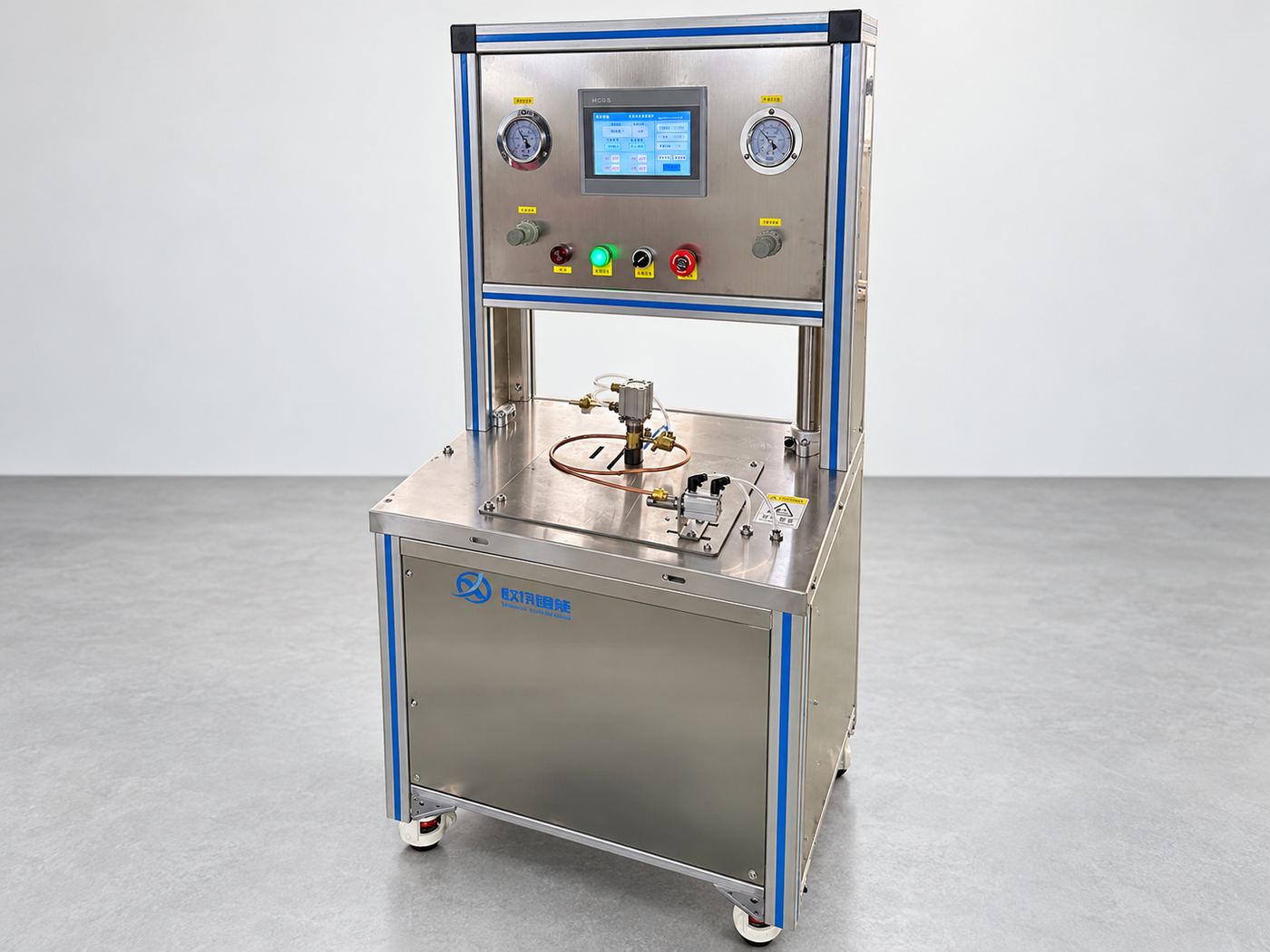
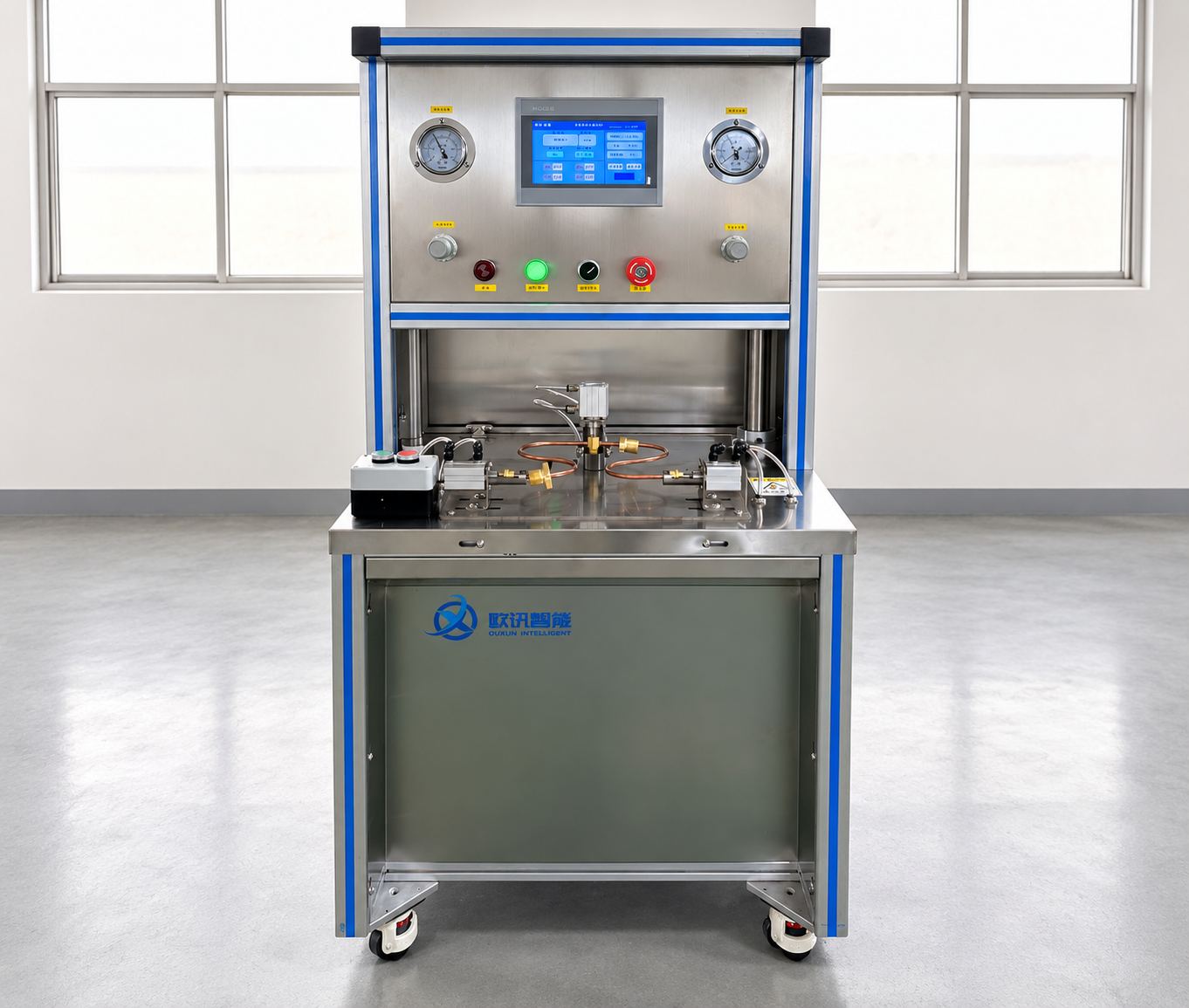
Running dual-standard orders calls for four things at the equipment and records level:
Pressure coverage for both bases. A bench sized for Class 150 (31 bar) cannot run the PN40 shell test at 60 bar. Envelope both systems’ top pressures before specifying equipment — the full checklist is in our valve testing equipment selection guide.
A judgment channel that can switch logic. Counting (drops/bubbles) and quantitative (mm³/s) are two different logics. Quantitative judgment runs on a flow meter or differential-pressure sensor plus acquisition software; switching standards then reduces to switching the acceptance formula and the hold-time table. This is the strongest argument for specifying data acquisition on a new bench — a technician counting bubbles cannot produce two consistent reports.
Instrument accuracy and calibration. Both standards require pressure gauges of at least grade 1.6, ranged at 1.5–3 × the test pressure, within calibration. A large share of dual-standard report disputes trace back to an overdue calibration sticker.
Raw pressure curves. The pressure-time curve is the only proof that hold time was met and pressure did not decay, and the only record that can reopen a rejection dispute. See planning a pressure test: fixturing, conditions and curves.
For how hydrostatic and pneumatic lines differ on the equipment side, see hydrostatic versus air test benches.
Writing the contract so nobody argues at inspection
Based on the differences above, a test clause in a technical agreement should pin down five points. Leave any one out and the two sides will read the standard differently:
- 1. Standard number with year: “API Std 598 (11th ed.)” or “GB/T 13927-2022”. Omitting the year means “latest edition”, but table values differ between editions.
- 2. Leakage acceptance as a number: either a class (“ISO 5208 class C”) or a rate (“gas ≤ 0.03 × DN mm³/s”). “Accepted per API 598” alone is ambiguous — the metal-seat and check-valve tables are three different tables.
- 3. Pressure basis stated: on large-bore or high-class orders, state which basis the shell test pressure comes from, not just “1.5 times”.
- 4. Hold time: give seconds or cite the standard’s table. At DN ≥350 the two standards diverge the most.
- 5. Detection method: name one — bubble counting, immersion, or flow meter; if pressure decay is used, state the conversion basis.
Bottom line: neither standard replaces the other. They serve different pressure systems, inspection habits and industries. What an engineer needs is not two memorized standards but one conversion table kept within reach — checked against the quotation and the inspection plan before either side commits. The tables in this article are meant to be exactly that.
Related reading: the test-method details behind GB/T 13927-2022
The current edition is the 11th (February 2023), which revised the leakage-rate tables and hold-time requirements and added a double block and bleed (DBB) high-pressure closure test. The pressure and hold-time figures quoted in this article follow the widely cited 10th-edition tables; verify borderline criteria against the current text.
One note on the “rating at 38 °C” cited throughout: that is the ASME B16.34 pressure-temperature table. How to use it — and why test pressure is rounded up to 25 psi, and why hold time follows size rather than pressure — is covered in the ASME B16.34 article.
This article compares API 598 and GB/T 13927 only. If the contract cites ISO 12266-1 or EN 12266-1, or you need to confirm which edition is current, see the Valve Test Standards Index (GB/T, ISO, API, EN cross-reference).
Related test equipment
Each test above maps to a bench. Pick by valve type and by the item you need to prove:
- Valve pressure test machine — shell at 1.5x and seat at 1.1x, with a report per valve
- Pipe and connection leak test bench — pressure-decay and helium methods, judged against a leak-rate limit
- Valve comprehensive test bench — pressure, tightness, flow, torque and life cycling on one clamping system
- Valve testing equipment range — browse all models by valve type and test item